When those guilty of theft obsess over past crimes committed by others, one must ask what they’re trying to hide.
There has been a growing chorus among African leaders and pan-African institutions, such as the Pan-African Parliament (PAP), demanding the return of historical artifacts looted by European colonizers during the dark days of imperialism.
To directly receive articles from Tendai Ruben Mbofana, please join his WhatsApp Channel on: https://whatsapp.com/channel/0029VaqprWCIyPtRnKpkHe08
This demand has intensified during the current sitting of the PAP in South Africa, with calls for the restitution of Africa’s stolen heritage echoing loudly through parliamentary corridors.
These artifacts—most of which are housed in European museums—include precious symbols of African identity, history, and royalty.
Indeed, some steps have already been taken.
Last year, France returned a few items looted from the royal palace of the Kingdom of Dahomey (in modern-day Benin) in 1890, by the commander of French forces in Senegal.
These included a towering wooden throne and lifesize zoomorphic statues that had long been kept at the Musée du Quai Branly in Paris.
That same museum still holds 3,157 other objects from Benin in its vast collection.
Germany, too, has agreed to return hundreds of the famed Benin Bronzes to Nigeria—part of a broader reckoning with its colonial past.
Other significant returns include a sword belonging to El Hadj Omar, given back to Senegal by France, and a bronze cockerel returned to Nigeria by Jesus College at Cambridge University in the UK.
These calls for restitution have been consistent with broader African demands for reparations for the injustices of colonialism and slavery.
And no one in their right mind can deny the moral and legal validity of these claims.
Justice requires accountability.
It is only fair that what was taken unjustly be returned, and that the descendants of those who suffered receive recognition and compensation.
Yet, what I find deeply unsettling is the glaring absence of equal, if not greater, outrage over the looting happening today—right before our eyes—at the hands of our very own leaders.
While African parliamentarians unite in anger over colonial thefts committed over a century ago, they appear remarkably mute when it comes to the plunder of Africa’s wealth currently unfolding under their watch.
Where is the Pan-African Parliament’s outrage when billions are stolen from African nations every year by corrupt officials and their foreign accomplices?
Where is the moral indignation when national resources are handed over through shady deals and illicit transactions that benefit a few and rob millions?
Let us consider the facts.
Africa loses between $88.6 billion and $148 billion every single year through corruption and illicit financial flows—much of this stemming from the smuggling and undervaluing of mineral resources.
These losses are not theoretical.
They have a direct and devastating impact on the lives of ordinary Africans.
This is money that could have gone toward building roads, hospitals, and schools.
This is money that could have lifted millions out of poverty.
In Zimbabwe alone, over $3 billion is lost annually to corruption, with up to $1 billion vanishing through gold smuggling alone.
The magnitude of these thefts is staggering—and they are taking place now, not a hundred years ago.
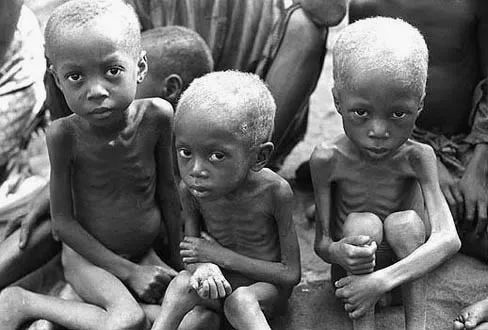
At the same time, nearly 490 million Africans are living in extreme poverty, surviving on less than $1.90 a day.
According to the United Nations Conference on Trade and Development (UNCTAD), this represents roughly 36% of the continent’s population.
In Zimbabwe, over 80% of the population lives in poverty.
These numbers are not the legacy of colonialism alone—they are the result of continued mismanagement, theft, and exploitation by those who claim to lead us.
So why are our leaders more concerned about a bronze cockerel or a stolen sword than the billions of dollars being siphoned out of the continent each year?
Why do they raise their voices for justice over century-old injustices but remain conspicuously silent about the injustices they themselves oversee today?
The answer is disturbingly simple: many of those in power are the chief culprits behind this modern-day looting.
Across the continent, ruling elites have entered into shady deals with foreign companies—particularly from China—that result in Africa being pillaged all over again.
In Zimbabwe, Chinese mining companies have become notorious for displacing local communities without proper compensation, bringing little to no development to the areas they exploit, and subjecting local workers to inhumane conditions and paltry wages.
Despite a government ban, some lithium mining companies are still exporting raw ore to China, bypassing local beneficiation and undermining national economic interests.
Meanwhile, public contracts are awarded in secrecy—usually without a public tendering process—and at grossly inflated costs, lining the pockets of ruling party cronies.
The result is a vicious cycle of poverty for the masses and obscene wealth for a tiny elite.
Many African leaders rank among the richest people on the planet, albeit unofficially, with stolen wealth stashed in offshore accounts and tax havens.
Former Nigerian dictator Sani Abacha reportedly looted over $5 billion, much of which is still being recovered decades after his death.
In Equatorial Guinea, President Teodoro Obiang Nguema and his family are accused of amassing vast fortunes while the majority of citizens live in abject poverty.
Zimbabwe’s political elite, too, are widely believed to have enriched themselves massively, all while preaching the rhetoric of liberation and economic justice.
Even the land—whose loss was one of the key grievances in Africa’s liberation struggles—has not been spared.
In Zimbabwe, the ruling elite seized the best and most fertile land following the chaotic land reform program, while the poor were resettled on barren and unproductive plots with no infrastructure or support.
What was touted as a revolution against colonial injustice became a carefully orchestrated looting spree by those in power.
These are the injustices our leaders should be addressing with the same passion and urgency they reserve for colonial relics.
These are the crimes that deserve the thunderous condemnation of the Pan-African Parliament and all African heads of state.
The return of artifacts and demands for reparations are necessary—but they should never distract us from the looting happening in the present.
The sword that was stolen in the 1800s, though culturally significant, does not feed the starving child in Zimbabwe or build the hospital in Nigeria.
The bronze statue returned from Paris will not educate the millions of African children learning under trees or sitting on the floor.
It is time African leaders got their priorities straight.
Justice is not a pick-and-choose endeavor.
If we want to reclaim our dignity, we must confront both the sins of the past and the crimes of the present.
If the bones stolen by colonists deserve a return, then so too do the billions stolen by corrupt African elites.
One without the other is a betrayal of the very people our leaders claim to represent.
 TENDAI RUBEN MBOFANA - THE UN-OPPRESSED MIND!