In Shona, we say: “Matakadya kare haanyaradzi mwana” — and the same can be said of empty statistics in a nation gripped by grinding poverty.
Today, the state-controlled The Herald newspaper proudly announced that the so-called Second Republic, under President Emmerson Mnangagwa, had implemented an astounding 9,706 development projects since 2018, of which 6,660 are said to be completed.
To directly receive articles from Tendai Ruben Mbofana, please join his WhatsApp Channel on: https://whatsapp.com/channel/0029VaqprWCIyPtRnKpkHe08
On paper, this sounds like a stunning success story—one befitting a nation on the cusp of transformation.
But a closer examination of these claims reveals a disturbing pattern: empty numbers, unverified statistics, and a narrative completely divorced from the lived reality of millions of Zimbabweans.
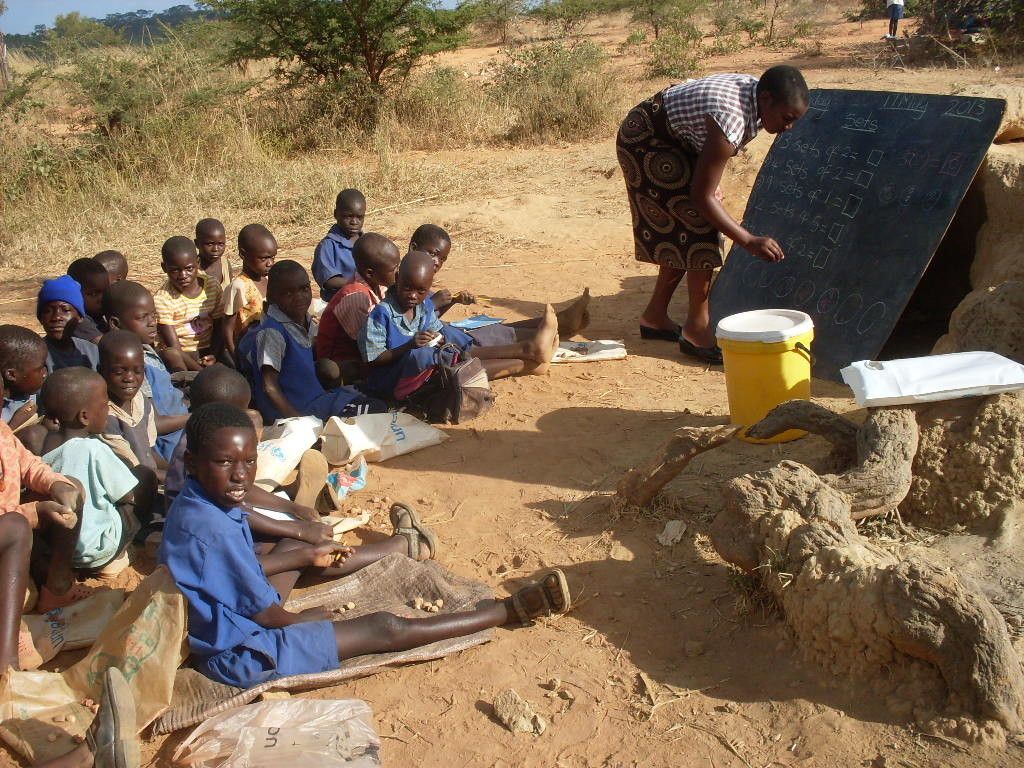
While government spin doctors pat themselves on the back for a supposed infrastructure revolution, ordinary citizens remain trapped in an endless cycle of suffering—crippled by 16-hour power cuts, collapsing hospitals, unaffordable public services, and grinding poverty.
The question every discerning Zimbabwean should be asking is: where are these 9,706 projects, and why are we not feeling their impact?
The government’s figures raise more questions than they answer.
Who exactly compiled this number?
Was the data independently audited?
Were the results subjected to public or parliamentary scrutiny?
There is no detailed breakdown of what constitutes a “project,” no cost estimates, no timelines, and no implementing agencies listed—just a parade of numbers meant to dazzle, not inform.
Does rehabilitating a single classroom or fixing a broken borehole in a remote village count as one full-fledged “project,” equal to building a modern hospital or dam?
Without standardization and transparency, the public has no way of knowing whether this is genuine development or just manipulation of statistics.
Year after year, Auditor-General reports have consistently exposed how numerous government projects are abandoned midway, grossly overpriced, or riddled with procurement irregularities.
So, until a full, independently verifiable database is made public, this 9,706 figure should be treated with deep skepticism.
Beyond that, the numbers are thrown around in a vacuum, devoid of context or baseline data.
What percentage of the country’s infrastructure gap do these projects close?
Have they translated into better healthcare outcomes?
Have school pass rates improved?
Are rural clinics now fully staffed and equipped?
Has access to clean water significantly increased?
If these projects are truly “life-changing” and “people-centred,” why do 80% of our people still live in poverty?
Why are urban dwellers still digging shallow wells and relying on candles?
Why do teachers and nurses continue to flee the country in droves for survival jobs in foreign lands?
Big numbers are only meaningful if they reflect real, measurable improvements in people’s lives.
In Zimbabwe, that’s not what we’re seeing.
The government claims that these projects have resulted in increased employment, massive housing delivery, and modernised infrastructure.
But again, where is the evidence?
Where are these houses that have supposedly improved living standards?
Is there a registry of new housing units built, their locations, and beneficiaries?
Where are the new jobs?
Are we counting short-term contract workers who disappear once construction ends?
What percentage of these projects generated permanent employment?
We hear of “modernisation” in vague terms, yet roads are potholed beyond recognition, power generation is a national embarrassment, and hospitals lack even the most basic medical supplies.
If the government wants to claim progress, it must present verifiable impact assessments, not just self-congratulatory praise.
The article goes further to suggest that Zimbabwe’s 2024 chairmanship of SADC led to numerous infrastructure benefits and accelerated national development.
But let’s be clear: chairing SADC is a ceremonial, rotational position, handed to member states by turn, not based on merit or achievement.
To pretend that this chairmanship somehow unlocked new development or investment is both disingenuous and insulting to the intelligence of Zimbabweans.
What new infrastructure projects were launched solely because of SADC chairmanship?
Were they regionally funded?
Did cross-border trade improve?
Was the rail system upgraded to enhance regional integration?
Unless such evidence is provided, these claims remain baseless propaganda.
Perhaps the most disturbing aspect of this grand announcement is how completely disconnected it is from the daily experiences of ordinary Zimbabweans.
Power cuts last up to 16 hours a day in many areas, paralyzing both industry and domestic life.
Public hospitals are understaffed and under-equipped.
Women are dying during childbirth for lack of basic facilities.
Cancer patients are left to die waiting for non-existent treatment.
Young professionals, including teachers and nurses, are fleeing the country because they cannot survive on slave wages.
Basic food items are beyond the reach of many, with inflation decimating incomes.
Informal traders are being harassed daily despite being the backbone of the economy.
In this context, talking about 9,706 projects is not only absurd—it’s an insult to a nation that is bleeding.
The government’s latest attempt to paint a picture of progress through bloated statistics and hollow declarations is a stark reminder of how far removed the ruling elite is from the suffering of ordinary people.
Zimbabweans do not eat numbers.
They cannot survive on slogans.
If the government truly believes it has delivered development, let it open up the compendium of projects for public audit.
Let citizens verify whether these projects exist and whether they changed their lives.
Let us compare reality to rhetoric—on the ground, not in glossy press statements.
Besides, if there were genuine, impactful development in Zimbabwe, people would see and feel it in their daily lives — they wouldn’t need to be told about it by The Herald.
Until then, this figure of 9,706 is just another chapter in the long novel of statistical deception and image management.
The truth is in our empty wallets, broken hospitals, decaying schools, and unlit homes.
No amount of spin can erase that.
 TENDAI RUBEN MBOFANA - THE UN-OPPRESSED MIND!