Language — the ability to communicate thought, emotion, and knowledge — is arguably the greatest gift bestowed upon humanity by our Creator.
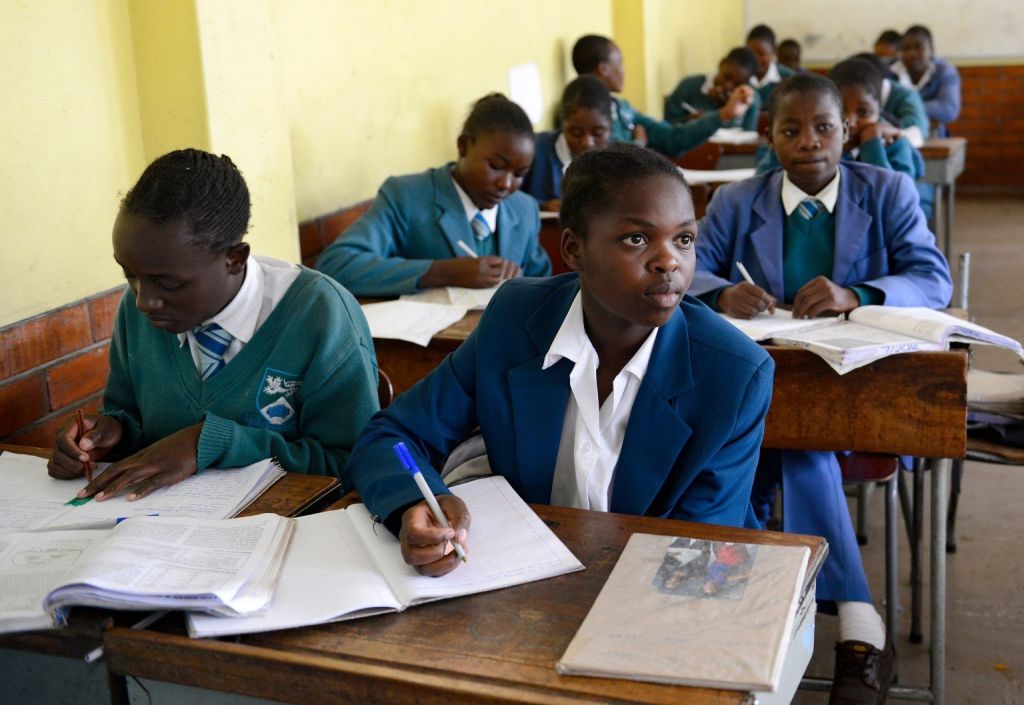
The recent pronouncement by Zimbabwe’s Minister of Primary and Secondary Education, Dr Torerayi Moyo, that Cabinet is considering a policy to teach subjects like mathematics and physics in vernacular languages, could not have come at a more appropriate time.
To directly receive articles from Tendai Ruben Mbofana, please join his WhatsApp Channel on: https://whatsapp.com/channel/0029VaqprWCIyPtRnKpkHe08
While responding to questions in the Senate last week, Dr Moyo suggested that poor performance in these subjects could be attributed not so much to their complexity, but to the English language in which they are taught.
His argument was clear: many learners fail to grasp key concepts simply because they are delivered in a language that is not their own.
This is not a theoretical assumption.
I have personally witnessed this language barrier play out in the classroom.
In 1993, a year after completing my high school Advanced Level studies, I worked briefly as a temporary teacher at a local primary school in my hometown of Redcliff.
Like most primary school teachers, I was tasked with teaching nearly every subject on the timetable.
What became evident to me very quickly was that many of the pupils struggled not because the material was too advanced, but because they could not understand the English in which I was teaching it.
In response, I made a bold — though unofficial — decision to teach in Shona, the language most of the children used at home.
The results were immediate and striking.
Suddenly, the children were engaged, enthusiastic, and responsive.
They grasped the concepts far more quickly and confidently.
What had previously seemed like a comprehension problem was, in reality, a language problem.
However, this move earned me a stern reprimand from the school head.
He accused me of undermining the school’s standards and labelled me undisciplined.
For him, English was sacrosanct — the only legitimate medium of instruction in Zimbabwean schools, save for the local language classes themselves.
What pained me the most was not the rebuke itself, but the head’s unwillingness to look beyond outdated policies and examine what was actually happening in the classroom.
He chose to see me as the problem instead of exploring why the pupils were suddenly improving.
If only he had been more open-minded, we might have pioneered a new way of learning — one that valued our own languages and recognised their power in fostering understanding.
Dr Moyo’s recent remarks in the Senate show that, decades later, we may finally be ready to have that conversation at a national level.
Indeed, common sense should tell us that most Zimbabwean children are more proficient in their mother tongues than in English.
These are the languages they use daily — with their families, friends, and within their communities.
English, in contrast, is typically confined to the classroom.
Why, then, do we expect children to effectively learn complex subjects in a language they are still struggling to master?
This is not unique to Zimbabwe.
Studies across Africa have shown that when children are taught in their native languages, their academic performance improves significantly.
Globally, countries such as China, Japan, Germany, and France educate their young in their own languages — and those students go on to innovate, build, and lead in the global arena.
Why should Africa, and Zimbabwe in particular, continue to insist on a colonial model that has proven ineffective?
In fact, one of the most overlooked yet deeply damaging consequences of this English-only approach is the way it stifles innovation.
Many Zimbabweans — children and adults alike — possess powerful, groundbreaking ideas and creative solutions to the challenges we face as a nation and as humanity.
Yet these ideas often remain locked inside them, unexpressed or poorly articulated, because society demands that they be communicated in polished English.
The language barrier becomes a barrier to expression, to invention, and ultimately to progress.
A powerful thought loses its impact when it cannot be communicated clearly — and for many, that loss begins in the classroom, where children are first taught that English is the only valid vessel for intelligence.
The 2013 Constitution of Zimbabwe recognises 16 official languages — a remarkable acknowledgement of our country’s rich linguistic diversity.
But recognition alone is not enough.
We must now make these languages central to our education system.
Teaching mathematics in Kalanga, science in Nambya, or physics in Tonga should not be seen as radical or regressive.
It should be seen as progress — as common sense finally prevailing.
Even many Zimbabweans who pass English in school remain far from proficient in it.
That’s because the English taught in Zimbabwe schools is a second language — functional at best, rarely deep or expressive enough for complex reasoning.
In fact, many children who are raised speaking only English are often not even good at it.
Their grammar is shaky, their vocabulary limited, and their expression awkward.
What is worse, they are entirely ignorant of their own heritage languages.
They are left in limbo — unable to fully communicate in any language.
When I reflect on my own upbringing, I am grateful my parents never allowed the English-medium education system to erase my identity.
In 1982, shortly after independence, I enrolled at a “white school” in Redcliff.
I was one of a handful of black pupils, and all our teachers were white.
Yet, at home, we continued speaking Shona.
My parents did not want me to lose touch with who I was.
The only time this changed — and only temporarily — was immediately after I moved to the school, when my Grade Three teacher expressed concern about my poor English.
This was because, unlike today, the English taught at the time in these former “Group A schools” was more advanced and tailored for children who spoke it as their primary language at home.
My father, who was also a teacher, took these concerns seriously.
For a while, we switched to speaking English at home, and I was made to read and write in English relentlessly.
That is where my love for writing began.
But once my English had improved, we reverted to speaking Shona at home.
My father understood the importance of balancing both languages — reinforcing English as a skill, while grounding me firmly in my mother tongue.
This is what we should want for all Zimbabwean children today.
True bilingualism — or even better, multilingualism — should be our goal, where our children not only speak English proficiently but also learn and understand more than one local language.
Our children should be grounded in their own languages and cultures, while also being equipped with the tools to operate globally.
English can and should be taught well — but it should not be imposed as the sole language of learning across all subjects.
Language is not merely a tool for communication; it carries with it our values, our identity, and our culture.
In Shona, for example, greeting your mother in the morning is not just “Good morning.” It is “Mangwanani amai, mamuka sei?” or “marara sei?”
And it is not spoken while slouched or standing casually — you curtsy or clap your hands.
Language teaches respect and social norms.
Is it any surprise that today’s children, raised with neither fluency in their mother tongues nor deep respect for their heritage, often lack basic manners and cultural grounding?
The time has come to place greater value on our own languages — both in our homes and in our schools.
We must no longer see them as inferior or informal.
Let every subject be taught in the language most understood in that region.
That is how children learn best.
That is how nations are built.
If countries like Japan, Korea, and China could do it — so can we.
Let us give our children the best possible foundation: one rooted in who they are, and in the language they know best.
 TENDAI RUBEN MBOFANA - THE UN-OPPRESSED MIND!