We stop learning only when we stop living.
There has been an outpouring of passionate reactions to my recent argument in favour of teaching school subjects in local vernacular languages.
To directly receive articles from Tendai Ruben Mbofana, please join his WhatsApp Channel on: https://whatsapp.com/channel/0029VaqprWCIyPtRnKpkHe08
Many have supported the idea, but others have raised concerns — particularly around the practicality of teaching technical subjects like mathematics and science in Shona or Ndebele.
I welcome these opposing views.
They are necessary for healthy national discourse.
However, I also believe that many of the objections are rooted in long-standing colonial prejudices and assumptions that deserve to be challenged, not blindly accepted.
One of the most common objections I’ve received is that our indigenous languages are simply “not rich or advanced enough” to convey complex scientific or mathematical concepts.
That belief, while understandable given our colonial legacy, is factually and historically flawed.
No language is born with a ready-made scientific vocabulary.
English itself — the language we now assume to be the natural medium for science — had no terms for gravity, electricity, or quantum physics just a few centuries ago.
These concepts were developed, and the language expanded accordingly.
The same can and must happen with our own languages.
Language is not a static relic — it is a living, evolving tool that grows through consistent use, especially in new domains.
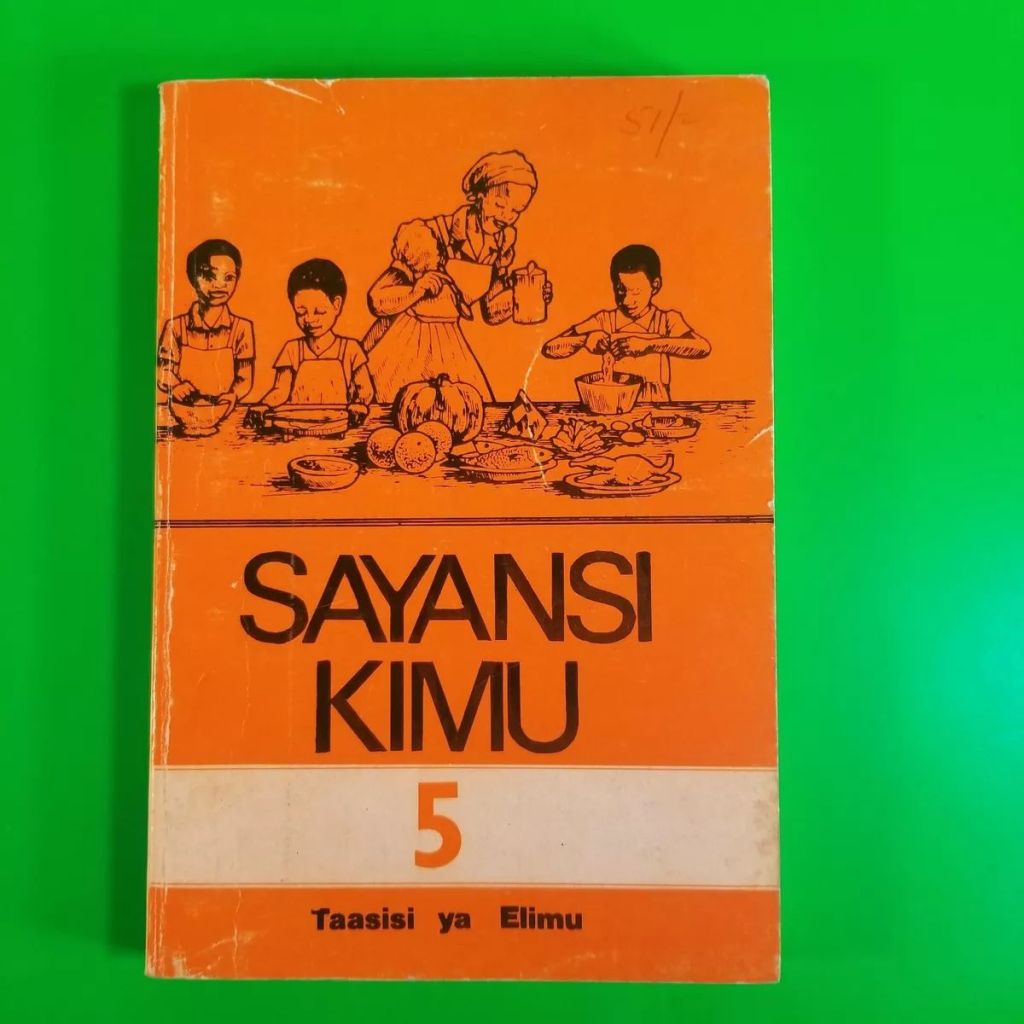
For example, Kiswahili — once considered limited — is now used to teach science and technology in Tanzania and Kenya.
Afrikaans, a relatively young language, was successfully developed into a full academic medium in apartheid South Africa within just a few decades.
If we never apply Shona or Ndebele to science, then of course they will appear “limited.”
But that is not a limitation of the language — it’s a limitation of our investment and imagination.
Just look at how Shona has organically evolved to accommodate new scientific and technological realities: words like runharembozha (mobile phone), dziwamupengo (COVID-19), chivhitivhiti (television), ndege (airplane), or runhare (telephone) did not exist just a few decades ago — yet they now feel natural to the speaker.
These examples show that our languages are dynamic and capable of expressing even the most complex modern realities — but only if we give them room to grow.
It has also been argued that because languages like Shona or Tonga are not international, they should not be used in formal education, particularly for global disciplines like science and mathematics.
But this line of thinking misses the entire point of mother-tongue instruction, especially in the early years.
The goal is not to produce English speakers — it is to produce learners who understand what they are being taught.
Studies across the globe have consistently shown that children learn best in the language they speak at home.
Cognitive development is enhanced when abstract concepts are introduced in the language one thinks, dreams, and reasons in.
Teaching in English often results in what education experts call double decoding — where learners are forced to simultaneously grapple with understanding the subject matter and decoding the unfamiliar language in which it’s delivered.
This creates a cognitive overload, especially for young learners whose first language is not English.
Instead of focusing their mental energy entirely on mastering concepts in mathematics, science, or social studies, they are splitting that energy between deciphering English vocabulary, grammar, and pronunciation, and trying to comprehend the actual content.
As a result, true understanding is often shallow, delayed, or entirely missed.
That’s a recipe for superficial learning and memorization without comprehension.
By contrast, teaching in a learner’s mother tongue allows them to fully engage with the content without the added barrier of a foreign language — enabling deeper comprehension, quicker mastery, and more confident participation in class.
I was recently asked whether I could teach the Pythagorean Theorem in Shona.
The answer is yes — and I can.
I can explain it as: “Kana une mativi maviri epakona yakaomarara (90 degrees), ugoti kona iyi ichitevedzerwa nerutivi rwekutarisana nayo, saka rutivi urwu rune urefu hunowanikwa nekuratidza kuti hupamhi hwokutanga pamwe chete nehurefu hwechipiri pahukwana zvinowanikwa nekwaniso yerutivi rwakatwasuka.”
Does that sound awkward?
Perhaps.
But no more awkward than early English translations of calculus concepts from Latin.
In fact, when mathematics and science were first introduced to English speakers, many of the now-familiar terms were seen as clumsy, foreign, or confusing.
For instance, the term “sine” — central to trigonometry — comes from the Latin “sinus,” which itself was a mistranslation of the Arabic “jayb,” meaning “fold” or “bay.”
It made little intuitive sense in English at the time, yet we use it today without a second thought.
Even Isaac Newton’s “fluxions” (his original term for what we now call derivatives) were met with confusion and resistance before calculus terminology was eventually standardized.
The English language had to bend, borrow, and reshape itself to fit the demands of new scientific knowledge — just as Shona or Ndebele can.
Languages are not born with ready-made words for “airplane,” “atom,” or “algorithm” — they create or adapt such words over time, through use, necessity, and creativity.
Language refinement takes time, practice, and commitment.
And with proper linguistic development, what is awkward today becomes fluent tomorrow.
Another objection raised is the perceived cost and logistical complexity of implementing such a curriculum shift.
Admittedly, transforming an entire education system is never cheap or simple.
But this is not a frivolous expense — it is a necessary investment.
Poor comprehension due to language barriers is a major driver of underperformance, dropout rates, and wasted human potential.
We cannot fix Zimbabwe’s broken education system without addressing the foundational issue of comprehension.
And comprehension begins with language.
Some readers worry that teaching science and mathematics in local languages will leave Zimbabwe behind technologically.
Ironically, it is our continued use of foreign languages that is holding us back.
How can we innovate in a language we don’t fully grasp?
How can we build homegrown solutions when we cannot even think scientifically in the language most familiar to us?
The countries leading the world in science and innovation — like South Korea, Finland, China, and Japan — all made the strategic choice to teach science in their own languages.
They did not wait to become advanced before using mother-tongue instruction.
They became advanced because they taught their children in familiar languages first.
Others have pointed to cultural erosion and the low use of local languages on social media as evidence that vernacular languages are no longer relevant.
But again, this is a misunderstanding of cause and effect.
Languages decline when they are neglected, not because they are unworthy.
When people are taught to read, write, and reason in their own languages, those languages naturally gain prestige and utility in all spheres of life — including online platforms.
Language use follows language empowerment.
Then there are the political suspicions.
Some believe that this policy push is mere grandstanding by the ruling party — a populist gimmick without genuine educational intent.
That may well be true.
But as critics of the regime, we must resist the temptation to reject every policy idea simply because of who is proposing it.
That would be intellectually lazy.
A policy should be judged on its merits.
The value of mother-tongue education is backed by decades of global research and the lived experience of millions of learners.
If ZANU-PF were to say the sun rises in the east, would we then insist it rises in the west just to prove a point?
To be clear, no one is proposing the abolition of English.
English remains important for international communication, higher education, and global trade.
What we are arguing for is a balanced, inclusive system that builds strong foundational learning in local languages while gradually introducing English.
We want children to grow up multilingual, not monolingual in a foreign tongue.
That is how we produce well-rounded citizens who can function both locally and globally.
We must also remember that the devaluation of our languages was central to the colonial project.
Colonizers knew that to dominate a people, you must first make them ashamed of their own tongue.
That psychological conquest still lingers today — when we laugh at someone for speaking deep Shona or Ndebele, when we regard English fluency as a mark of intelligence, and when we dismiss our own languages as “too primitive” for science.
That mindset is what we must dismantle if we are serious about decolonising education.
Ultimately, the debate about language in education is not just about linguistics — it is about justice, dignity, and empowerment.
It is about making sure that every Zimbabwean child, whether born in Borrowdale or Binga, has a fair chance to succeed — not because they are good at English, but because they are good at thinking, reasoning, and problem-solving.
And that begins with being taught in a language they truly understand.
If we are to build a nation that values both excellence and equity, then embracing our languages — even in science and maths — is not just an option.
It is a necessity.
 TENDAI RUBEN MBOFANA - THE UN-OPPRESSED MIND!