This country’s story has become legendary — but for all the wrong reasons.
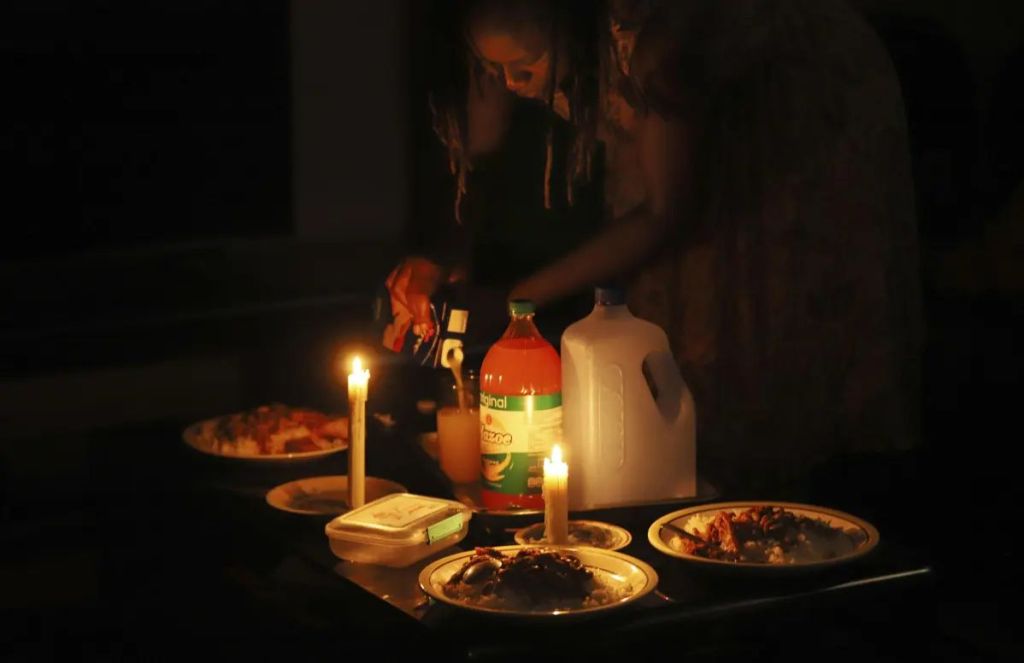
Yesterday was yet another day of misery in Zimbabwe, marked by yet another power outage.
To directly receive articles from Tendai Ruben Mbofana, please join his WhatsApp Channel on: https://whatsapp.com/channel/0029VaqprWCIyPtRnKpkHe08
The electricity went off sometime in the afternoon and did not return throughout the night.
It was only restored around 5 am, only to vanish again less than an hour later.
It returned again at around 7 am, and as if by clockwork, disappeared again by 10:50 am.
We are not even sure if we can expect power to be restored today.
This is the reality of Zimbabweans.
And we are told to accept this as normal — it’s load-shedding, they say.
Yet this is no longer just “load-shedding” in the traditional sense.
This is a symbol of a country broken by decades of criminal misgovernance and official theft, where corruption is rewarded with national honor and hero status, while the citizens, who are the true victims, are left to suffer in silence.
Zimbabwe’s electricity crisis is not new.
For more than two decades, the country has been caught in a near-constant power deficit, plunging homes, schools, clinics, businesses, and industries into darkness for hours — sometimes days — on end.
As of mid-2025, Zimbabwe’s national electricity requirement stands at around 2,200 to 2,400 megawatts per day.
Yet current generation capacity falls woefully short.
According to the latest figures, only about 1,600 MW is being generated — with Hwange Thermal Power Station contributing roughly 1,000 MW, Kariba Hydro about 450 MW, and Independent Power Producers a meagre 40 MW.
That leaves the country with a massive shortfall of nearly 600 MW.
For a nation with a crippled economy and severely constrained fiscal resources, this gap in power generation cannot easily be plugged by imports.
Zimbabwe has to rely on neighboring countries like Mozambique, Zambia, and South Africa — all of whom are facing their own domestic electricity challenges and cannot reliably export power.
In some instances, these countries require upfront payment in foreign currency, something Zimbabwe always struggles to provide due to its depleted forex reserves and ballooning debt.
So the question remains: why is Zimbabwe, more than 40 years after independence, still incapable of producing enough power for its own people?
The answer lies in the shameful and reckless neglect of our energy infrastructure.
Zimbabwe’s power generation remains largely dependent on colonial-era equipment.
Hwange Thermal Power Station was built in the 1970s and has suffered decades of poor maintenance, underinvestment, and overuse.
Kariba South, our largest hydroelectric power station, is entirely dependent on water levels in Lake Kariba — which have been severely depleted by successive droughts induced by climate change and El Niño weather patterns.
But why, in this day and age, is Zimbabwe still so dependent on coal-fired and hydroelectric plants?
Why have we not, like other progressive nations, embraced solar, wind, and other renewable sources?
The reason is corruption.
Plain and simple.
For over three decades, the Zimbabwe Electricity Supply Authority (ZESA) has been a cesspool of grand looting, mismanagement, and political interference.
At the heart of this rot was none other than Sydney Gata, who until his recent death, had been the Executive Chairman of ZESA and arguably the most powerful man in the energy sector.
Gata, who was given a national hero status by President Emmerson Mnangagwa a few days ago, leaves behind a legacy not of progress or innovation — but of dysfunction, decay, and darkness.
In a recent article I penned on July 6 titled “When Corruption is Honoured: The National Hero Status of Sydney Gata,” I detailed the staggering levels of corruption that plagued ZESA under Gata’s leadership.
Investigations by the Zimbabwe Anti-Corruption Commission (ZACC) revealed irregular procurement of transformers, fraudulent tenders awarded to politically connected cronies, unexplained foreign trips costing tens of thousands of dollars, and the illegal allocation of luxury vehicles to executives.
More damning was the looting of public funds meant for power station refurbishments and rural electrification projects — money that simply vanished, while the country sank further into powerlessness.
Yet despite all this, Sydney Gata was declared a national hero.
This is the painful reality of Zimbabwe.
Thieves and plunderers are elevated to the highest levels of honor, while millions of innocent Zimbabweans suffer in silence.
Today, I personally could not do my work properly — my laptop and phone batteries are draining, and without electricity, I’m forced to slow down or stop altogether.
Businesses lose productivity.
Children cannot study.
Hospitals operate in fear that the next power cut could cost lives.
All of this is a direct result of the rot at ZESA, and the glorification of those who caused it.
There is something fundamentally wrong with a system that praises those who have wrecked the country.
It sends a dangerous message — that in Zimbabwe, corruption pays.
That one can preside over the collapse of critical national infrastructure, and still be celebrated at Heroes Acre.
It tells the youth of this nation that honesty, competence, and accountability are not the path to national recognition — but rather, loyalty to the ruling elite and a proven track record of looting and impunity.
This is why Zimbabwe will never move forward.
The country is in reverse because it honors the wrong people.
Instead of rewarding excellence, we reward excess.
Instead of promoting integrity, we elevate infamy.
Every time a corrupt official is declared a hero, the morale of honest civil servants is eroded.
Every time the looters are praised, another young Zimbabwean gives up hope and begins to believe that “if you can’t beat them, join them.”
It is the normalization of moral decay, the institutionalization of theft, and the systemic betrayal of the people.
Our economy is hemorrhaging because industries cannot operate without reliable power.
The Confederation of Zimbabwe Industries (CZI) has warned that power outages are costing companies millions in lost production every month.
Small businesses, particularly in the informal sector, are hit even harder.
Tailors, welders, barbers, fast food restaurant owners — all struggle to survive as electricity becomes more of a luxury than a basic utility.
Meanwhile, the very people who have made this crisis possible are enjoying the comfort of air-conditioned offices, luxury homes with solar backup systems, and round-the-clock generator power, all funded by taxpayer money.
The hypocrisy is staggering.
We are asked to tighten our belts while those in power loosen theirs.
We are told to be patient while they enrich themselves.
And in the end, they are laid to rest with full honors, while the nation bleeds.
Zimbabweans are not lazy.
We are not helpless.
We are simply trapped in a system where those who destroy are honored, while those who build are ignored or even persecuted.
The time has come for us to question this culture of glorifying corruption.
The time has come to demand accountability, not applause for thieves.
Until we do, we will remain a nation in the dark — both literally and figuratively.
 TENDAI RUBEN MBOFANA - THE UN-OPPRESSED MIND!