The moment a nation begins to celebrate corruption, it loses not only its moral compass but also its very soul.
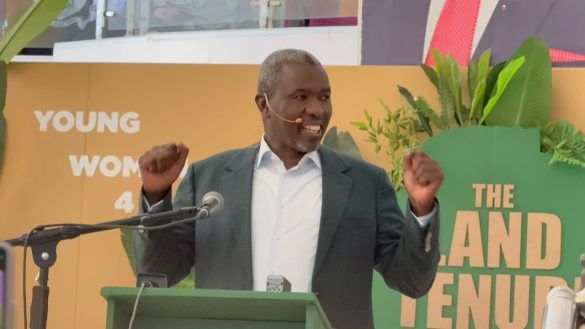
Patrick Chinamasa’s recent remarks from Nigeria, in which he compared the Nigerian people’s respect for their millionaires and billionaires with what he views as Zimbabweans’ “suspicion” of wealth, are not only misleading but an astonishing exercise in gaslighting.
To directly receive articles from Tendai Ruben Mbofana, please join his WhatsApp Channel on: https://whatsapp.com/channel/0029VaqprWCIyPtRnKpkHe08
In his glowing praise of Nigerian business tycoon Aliko Dangote, Chinamasa attempts to draw a parallel with certain wealthy individuals in Zimbabwe — whom he implicitly believes deserve the same admiration and reverence.
This comparison is not only false, but dangerous.
It conflates genuine entrepreneurial success with the murky underworld of politically-connected looting and state capture.
Let’s start with the obvious: Aliko Dangote is a world-renowned industrialist whose wealth was built through transparent, traceable, and credible business ventures.
From cement to sugar, from fertilizer to oil refineries, Dangote has consistently invested in sectors that produce real value, create employment, and contribute to national development.
His companies are listed, regulated, and scrutinized.
His name appears on credible and globally recognized lists — such as Forbes and Bloomberg — as one of the richest men in Africa.
As of March 2025, he had an estimated net worth of US$28.1 billion.
There has never been any credible accusation against him of looting public resources, receiving fraudulent government tenders, or using political influence to build his empire.
His business dealings are in the open.
His success is earned, not handed over through state patronage.
Contrast that with Zimbabwe’s so-called millionaires and billionaires — the so-called “Zvigananda” whom Chinamasa wants us to respect.
Who are these people, and what exactly do they do?
Take for example, Kudakwashe Tagwirei or Wicknell Chivayo — two names often associated with extreme wealth, opulence, and proximity to political power.
While they are known for their flashy lifestyles and generous handouts, there is still no clarity or transparency about how they acquired their riches.
What is Tagwirei’s actual business model?
How did he acquire key interests in Zimbabwe’s fuel industry, in the financial sector through CBZ and ZB Bank, or in mining through Kuvimba Mining House?
Were these acquisitions part of a competitive, transparent process?
Have they been audited independently?
And if so, where is the evidence?
Wicknell Chivayo is an even more bewildering case.
What exactly does he do?
What are his products?
What services does he offer?
Where are his factories, his offices, his employees?
How does one explain his ability to dish out expensive cars, give away large sums of cash, and procure private jets for personal leisure or gifting sprees?
These are not idle questions from jealous Zimbabweans.
They are legitimate inquiries in a country whose economy is struggling, where basic services are collapsing, and where citizens are being told to tighten their belts while a few politically connected individuals enjoy obscene luxury.
Mr. Chinamasa’s remarks are an insult to the intelligence of Zimbabweans who are rightfully demanding transparency and accountability.
To compare Aliko Dangote with the likes of Tagwirei or Chivayo is to compare day and night.
It’s disingenuous and deeply manipulative.
Zimbabweans are not against wealth.
They are not opposed to seeing black people succeed.
In fact, we take immense pride in those among us who rise through genuine innovation, perseverance, and integrity.
One need only look at Strive Masiyiwa to understand what Zimbabweans truly admire.
Masiyiwa, like Dangote, is listed among Africa’s richest people on credible platforms such as Forbes.
His journey is well-documented: from founding Econet Wireless to building an international telecommunications and technology empire.
He fought legal battles against a repressive regime that tried to block his entrepreneurial dreams.
He did not gain his wealth by being in the ruling party’s inner circle, nor did he benefit from shadowy procurement processes.
He built his wealth through grit and brilliance, creating thousands of jobs along the way.
That is why Zimbabweans respect him.
That is why Masiyiwa can hold his head high among Africa’s business elite — because his hands are clean.
What Zimbabweans reject — and rightly so — is the glorification of looting and mediocrity disguised as economic empowerment.
We do not owe respect to individuals whose wealth is tied to corruption, state capture, and the wholesale plundering of public resources.
We do not owe reverence to those whose only business credential is their proximity to power.
Chinamasa’s suggestion that Zimbabweans are unpatriotic or ungrateful for not embracing these characters is a tired and dishonest narrative meant to silence legitimate criticism and inquiry.
Respect must be earned.
It cannot be demanded by political decree.
Zimbabweans are demanding answers not out of bitterness, but out of a desire for justice and fairness.
When citizens ask how certain individuals became wealthy almost overnight, they are not being unpatriotic — they are being responsible.
When we question the awarding of billion-dollar contracts to companies with no track record, we are not being jealous — we are asking for accountability.
That is what democracy is about.
It is worth noting that the very reason people like Tagwirei and Chivayo do not appear on credible international wealth lists is because their wealth cannot be verified by independent financial institutions.
There is no clear asset portfolio, no documented valuation, no traceable shareholding structures that can withstand scrutiny.
It is not because Forbes or Bloomberg are biased — it is because the standards they use cannot be met by individuals whose wealth is built in the shadows.
So, Mr. Chinamasa, with all due respect, your attempt to shame Zimbabweans into silence will not work.
We will continue to speak.
We will continue to ask questions.
We will continue to demand transparency, no matter how uncomfortable it makes the politically connected elite feel.
Zimbabweans are not the problem.
The problem is a system that enables looting, protects the corrupt, and then demands blind loyalty from a suffering population.
If you want us to respect the wealthy, then support policies that reward genuine entrepreneurship.
Encourage business environments that do not require political connections to succeed.
Build systems that honour merit over manipulation.
Only then will we have a new generation of black industrialists who, like Aliko Dangote or Strive Masiyiwa, can truly make us proud.
Until then, we will not be bullied into worshipping false gods of wealth.
We know the difference between builders and looters.
And we will not be gaslit into silence.
 TENDAI RUBEN MBOFANA - THE UN-OPPRESSED MIND!