Life often presents us with realities so puzzling, they leave us questioning the very essence of human behaviour.
There is something truly disturbing — even frightening — about how easily a people can be robbed of everything, left destitute, and then conditioned to feel grateful for the few crumbs that fall from the very hands that looted their inheritance.
To directly receive articles from Tendai Ruben Mbofana, please join his WhatsApp Channel on: https://whatsapp.com/channel/0029VaqprWCIyPtRnKpkHe08
This is not just some abstract philosophical observation.
It is the lived reality of millions of Zimbabweans, who have endured years of plunder, corruption, and systematic economic sabotage at the hands of a ruling elite that has perfected the art of dispossession — while at the same time convincing the dispossessed to sing songs of praise in their honour.
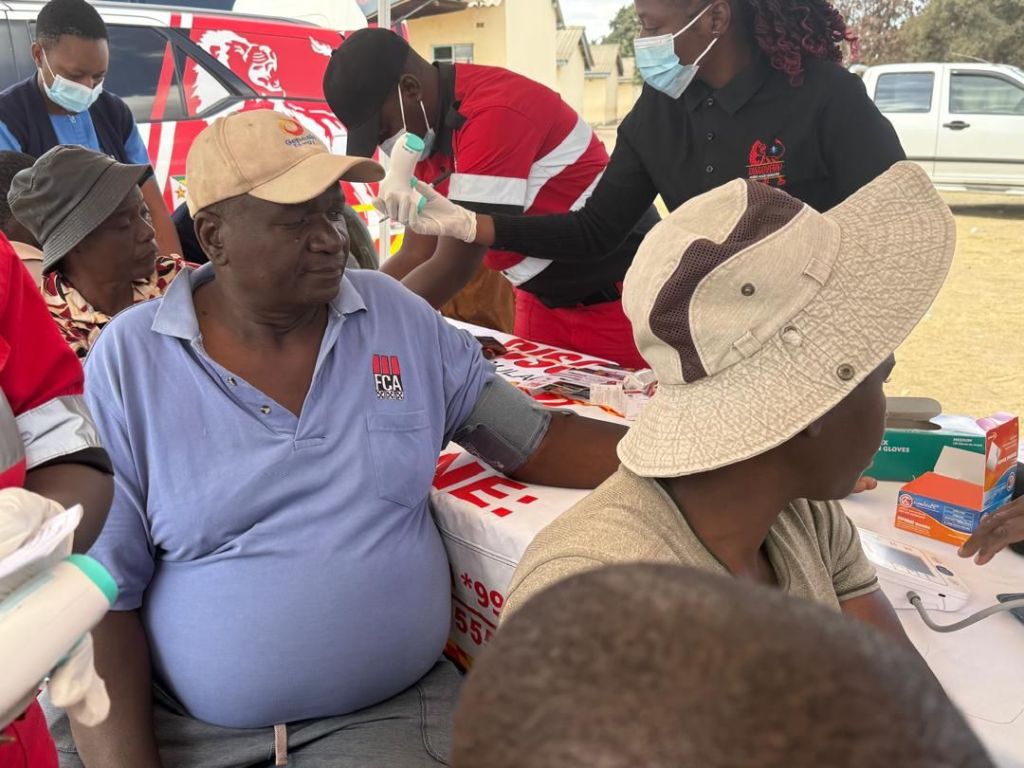
I was reminded of this tragic irony while recently watching a news segment on a so-called “Presidential Medical Outreach Programme” held in Epworth, a poverty-stricken settlement just outside Harare.
The scene was as heart-wrenching as it was maddening.
Dozens of men and women, some elderly and visibly ailing, had spent hours standing in long queues under the scorching sun, waiting to receive basic medical attention — the kind of services that should, in any functional country, be readily available at local clinics or hospitals.
But instead of expressing justified outrage at a healthcare system that has all but collapsed, these desperate citizens were full of joy and adulation for President Emmerson Mnangagwa, who was being celebrated as the benevolent benefactor of this rare act of generosity.
The gratitude was overflowing.
People smiled for the cameras and ululated in praise, thankful that the President had remembered them — at least for a day.
Never mind that the last time Epworth likely experienced such an intervention was during the previous election season, and that the next time they will be “blessed” in this way might be another year away.
In the meantime, they will return to the same dilapidated, poorly equipped, and underfunded clinics that are little more than empty shells.
There, they will be met with chronic shortages of everything from paracetamol to antibiotics, no access to diagnostic equipment, and a skeletal staff of underpaid and demoralised healthcare workers.
Yet, none of this seemed to spark any anger or reflection.
No one appeared willing to ask why they needed a one-day outreach in the first place.
Why is it not possible to simply walk into their local clinic and get treated?
Why do they have to wait for the President, as if he is doing them a personal favour, rather than fulfilling his constitutional obligation to ensure the provision of quality healthcare for all?
Why are billions of dollars — which should be funding these public services — constantly being siphoned off through corruption, illicit financial flows, inflated tenders, and political patronage schemes?
The people of Epworth, like many others across the country, chose not to confront these painful truths.
Instead, they cheered.
And in doing so, they normalized their suffering and legitimized the very system that keeps them in perpetual poverty and dependence.
It reminded me of the image of a man who steals his neighbour’s only cow, then returns the next day with a piece of liver and is thanked profusely for his “kindness.”
The cow thief is not held accountable.
Instead, he becomes a hero — a “generous man” who gave his neighbour meat.
This, in essence, is Zimbabwe’s story.
And this disturbing phenomenon is by no means unique to Epworth.
It is a nationwide epidemic of psychological capture, sustained by propaganda, fear, patronage, and decades of systematic disempowerment.
We see it when youths are bussed into stadiums to celebrate the delivery of a few tractors or trucks, paraded as “youth empowerment projects.”
They sing and dance, declaring undying loyalty to the “visionary leadership” of President Mnangagwa, never stopping to ask how we got here.
Why do they need empowerment in the form of a couple of chickens, a few goats, or some rabbit cages?
What happened to the vibrant industries that once employed our parents and grandparents — industries that paid decent wages, provided pensions, medical aid, housing schemes, and gave people dignity?
Those jobs are gone, swallowed by the same corruption and mismanagement that now leaves graduates selling airtime on street corners, working as touts (mahwindi), illegal artisanal miners (makorokoza), or forced into prostitution.
Our youths have inherited an economic wasteland — a country with no formal job market to absorb them, where higher education offers no guarantee of a decent life, and where hustling has become the new normal.
Yet, somehow, those responsible for this decay have become the saviors.
We see this same tragic pattern replicated across all corners of our society.
Our elderly, who toiled for decades in service of this country, are expected to feel grateful for a paltry US$50 monthly pension from NSSA — an amount that cannot even cover basic groceries for a week, let alone rent, medication, or transport.
Civil servants — the backbone of any functioning state — are supposed to sing praises for earning the equivalent of US$250 a month, while enduring harsh working conditions, inflation, and a collapsing economy.
In urban areas, residents who have gone for years without a drop of clean tap water are expected to break into song and dance when a single borehole is sunk in their community — as though this is a remarkable gift rather than a desperate stopgap in a failed water delivery system.
Time and again, we are made to celebrate symptoms of failure disguised as progress, and to thank the very hands that have plunged us into this crisis.
The same people who destroyed our economy, looted our resources, and collapsed our state institutions are now seen as messiahs for handing out what amounts to pocket change.
They steal billions and give back a few thousand — and in return, they are hailed as heroes.
In Zimbabwe, this has become the default method for sanitizing corruption.
Loot the nation dry, then make a show of generosity by donating boreholes, handing out wheelchairs, or bringing a mobile clinic once a year.
The people, starved of alternatives and denied the tools for critical engagement, respond with gratitude.
The thief is no longer a thief — he is “our father,” “the listening leader,” “the one who cares.”
It is this tragic reversal of logic that I find most frightening.
The ability of an oppressive system not just to survive, but to thrive by convincing its victims that they are being served — even loved.
It is no longer enough for power to dominate physically; it must now dominate emotionally and psychologically.
And in Zimbabwe, that domination is nearly complete.
But it doesn’t have to be this way.
The first step toward liberation is recognition.
Recognition that the suffering we endure is not natural or inevitable — it is the direct result of choices made by those in power.
Recognition that gratitude for crumbs is not a virtue — it is a sign of how low our expectations have been driven.
And recognition that we deserve more than this — more than token handouts, more than staged outreach events, more than empty slogans and staged ribbon-cuttings.
We deserve a country where hospitals function every day, not just during presidential visits.
A country where jobs are plentiful, and empowerment is not a chicken project but a structured, dignified livelihood.
A country where leaders are held accountable, not worshipped for returning a sliver of what they’ve stolen.
Until we come to that realization, we will continue to dance for liver while the whole cow is devoured behind our backs.
 TENDAI RUBEN MBOFANA - THE UN-OPPRESSED MIND!