You can rig an election—but you can’t rig a nation into prosperity.
Try as you might to dress up the numbers, economic suffering always reveals the truth.
To directly receive articles from Tendai Ruben Mbofana, please join his WhatsApp Channel on: https://whatsapp.com/channel/0029VaqprWCIyPtRnKpkHe08
And no matter how loudly the Zimbabwean government celebrates its recent rebasing of the Gross Domestic Product (GDP) to a new high of US$44.4 billion, the lived realities of the majority say something very different.
According to the government, Zimbabwe is now the fifth-largest economy in the Southern African Development Community (SADC).
The Zimbabwe National Statistics Agency (ZIMSTAT), after its 2023 Economic Census, revised the country’s GDP upward from US$35.2 billion to US$44.4 billion, citing previously unrecorded economic activity—especially in the informal sector and among new businesses established since 2019.
But who has actually felt this sudden prosperity?
Which family found it easier to put food on the table the morning after the announcement?
Did school fees become more affordable?
Did clinics suddenly have medicine?
Did jobs miraculously appear?
The answer is obvious.
This statistical maneuver has changed nothing for the millions of Zimbabweans whose daily lives are defined by hunger, unemployment, collapsing public services, and hopelessness.
What we are witnessing is not economic recovery.
It is economic gaslighting—a government desperate to paint a picture of progress where none exists.
Let’s be clear: rebasing GDP is a routine statistical exercise that updates how economic activity is measured to reflect changes in the economy’s structure.
It does not create new wealth.
It does not generate new jobs.
Rather, it reclassifies and captures economic activities that were previously uncounted or underestimated.
In other words, the economic cake hasn’t grown—it’s simply been better measured and sliced differently.
The Zimbabwean government has spun this into a narrative of growth and resilience.
But rebasing a broken economy does not make it whole.
All it does is count what wasn’t counted before—mostly out of survival, not prosperity.
In this case, the GDP revision is largely due to the inclusion of informal sector activity.
But this so-called “growth” is a symptom of collapse, not success.
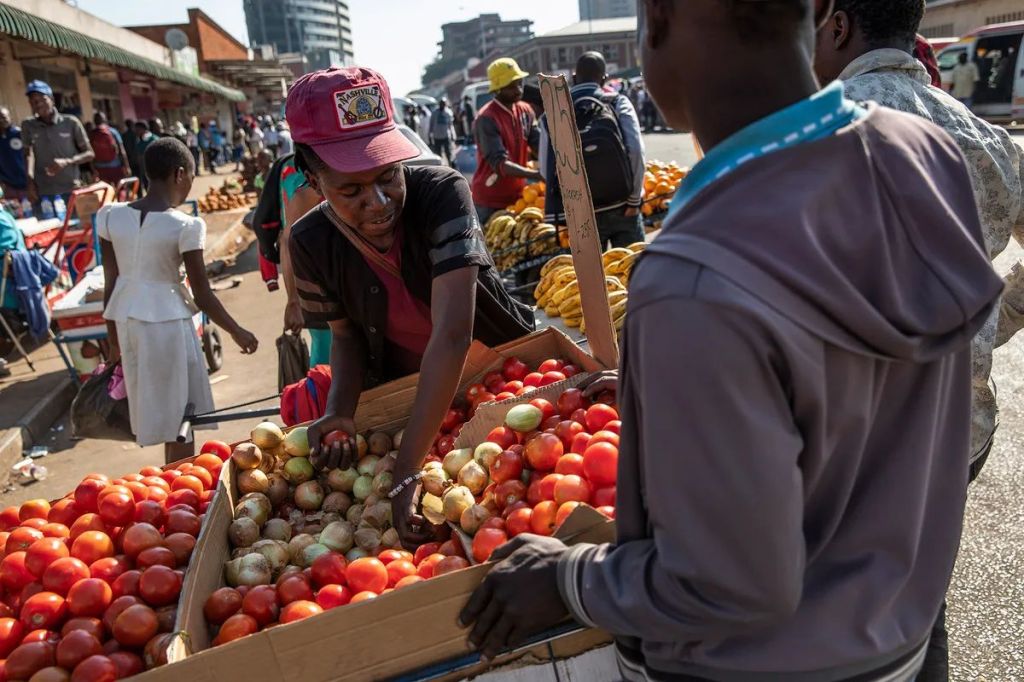
The informal sector in Zimbabwe is not a thriving hub of innovation and entrepreneurship—it is a last resort for survival.
Over 80% of the country’s workforce operates outside the formal economy, not because of opportunity, but because formal jobs no longer exist.
Street vending, cross-border trading, and backyard workshops are not indicators of a healthy economy.
They are signs that the formal sector has been decimated by corruption, policy failures, and economic instability.
These are the very conditions created and sustained by the same government now boasting about “silent growth.”
Even more troubling is the government’s attempt to use the revised GDP to claim it is not in a debt sustainability crisis, only a “liquidity” challenge.
But this is a dangerous distortion of facts.
Zimbabwe’s external debt sits at over US$18 billion, with the country in arrears to most of its international creditors.
Creditors are not fooled by rebased figures.
Debt is not repaid with statistical optimism—it’s repaid with real money, which Zimbabwe does not have.
Furthermore, real development is not measured by GDP figures.
It is measured by quality of life.
Yet today, more than 70% of Zimbabweans live in poverty, according to ZIMSTAT’s own data.
The World Bank estimates that nearly 8 million Zimbabweans—almost half the population—live in extreme poverty, surviving on less than US$2.15 a day.
These are not just numbers; they are millions of broken dreams and lives in hardship.
Real economic development would mean that no Zimbabwean child is sent home for unpaid school fees.
That parents don’t need to choose between food and transport.
That citizens are not reduced to queuing for hours for a once-in-a-while “presidential medical outreach program” because basic healthcare is inaccessible.
A growing economy would mean hospitals are stocked and staffed—not crumbling under the weight of underfunding and neglect.
If Zimbabwe was truly rising economically, young people would not be fleeing the country in droves.
They would be securing decent, well-paying jobs or building successful businesses with support from functioning financial institutions.
They would not be fighting over politically driven, underfunded “empowerment programs” that only benefit the well-connected few.
But the Zimbabwean government does not talk about these things.
Instead, it fixates on numbers that look good on paper.
It uses the rise in GDP per capita—from US$2,259 to US$2,859—as evidence of improved national income.
But this figure is meaningless in a country where wealth is concentrated among political elites and cartels, while the vast majority struggle just to survive.
Even Finance Minister Mthuli Ncube’s claim that inequality will be tackled through “progressive taxation” rings hollow.
Zimbabwe’s tax system is anything but progressive.
The rich and politically connected enjoy tax exemptions and incentives, while ordinary citizens are overburdened by punitive taxes like the 2% Intermediated Money Transfer Tax (IMTT), value-added taxes on basic goods, and ever-rising toll fees.
Meanwhile, the state’s social protection programs are underfunded and inefficient—if they exist at all.
This is the Zimbabwe we live in: a land of manipulated figures and unrelenting hardship.
Where ministers recite macroeconomic jargon while citizens scavenge for food.
Where the state-controlled media parades rebased statistics as national achievement while hospitals lack painkillers.
Where government announcements celebrate fictional growth and ignore the poverty, hunger, and despair gnawing away at the majority.
But you can’t rig prosperity.
The economy does not respond to spin.
Real development requires visionary leadership, competent governance, and a genuine commitment to the well-being of the people.
It requires investment in infrastructure, education, healthcare, and job creation—not just tweaks to statistical models.
Until Zimbabweans feel the benefits of this supposed growth—until they no longer have to queue for basics, until children can go to school without being sent home, until youth have real opportunities to thrive—this new GDP means nothing.
It is a number without substance.
A symbol without soul.
The country needs more than figures.
It needs justice, dignity, and a future that people can believe in.
No amount of rebasing can deliver that.
Only real change can.
 TENDAI RUBEN MBOFANA - THE UN-OPPRESSED MIND!