The deliberate misrepresentation of facts—especially by those in positions of authority—can be profoundly dangerous, particularly when it distorts the public’s understanding of how a democratic state is meant to function.
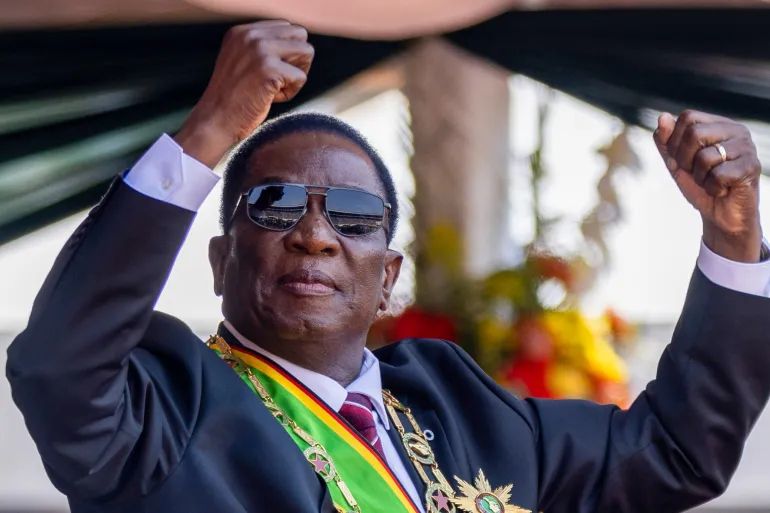
In what should be a deeply worrying misrepresentation of Zimbabwe’s constitutional democracy, the Permanent Secretary in the Ministry of Information, Nick Mangwana, recently claimed that President Emmerson Mnangagwa, by virtue of being Head of State, is also “head of all three arms of the State.”
To directly receive articles from Tendai Ruben Mbofana, please join his WhatsApp Channel on: https://whatsapp.com/channel/0029VaqprWCIyPtRnKpkHe08
This assertion, published on his official X (formerly Twitter) account, was made in praise of Mnangagwa’s attendance at a National Assembly Q&A session — which Mangwana hailed as an act of exemplary leadership.
However, while such an appearance may have been commendable, the dangerous and legally unfounded claim that the President presides over all three branches of government cannot go unchallenged.
It flies in the face of constitutionalism and democratic governance, and it reflects the authoritarian undercurrents that continue to undermine Zimbabwe’s already fragile democratic institutions.
At the heart of any functional democracy lies the foundational principle of the separation of powers.
This doctrine, rooted in Enlightenment political philosophy and entrenched in Zimbabwe’s 2013 Constitution, mandates that the Executive, Legislature, and Judiciary operate as distinct and independent arms of the state.
Each has its own constitutional powers and responsibilities and serves as a check and balance on the others.
The President is the head of the Executive arm — which includes the Cabinet, civil service, and state departments.
He is not, under any circumstances, the head of Parliament (the Legislature) or the courts (the Judiciary).
These institutions are led respectively by the Speaker of the National Assembly and the Chief Justice of the Supreme Court, both of whom derive their authority from constitutional provisions and not presidential appointment or patronage.
Section 3(2)(e) of the Constitution of Zimbabwe identifies “the separation of powers” as one of the core principles of good governance that bind the State and all its institutions.
Furthermore, Section 119(2) mandates that “Parliament must ensure that the provisions of this Constitution are upheld and that the State and all institutions and agencies of government at every level act constitutionally and in the national interest.”
Additionally, Section 164(1) affirms that “the courts are independent and are subject only to this Constitution and the law, which they must apply impartially, expeditiously and without fear, favour or prejudice.”
Nowhere in the supreme law of the land is it suggested — let alone declared — that the President is the head of these two other branches of government.
Any suggestion to the contrary is not only inaccurate, but also dangerously authoritarian.
Why does this matter?
Because the separation of powers is not a mere academic concept or symbolic ideal — it is a safeguard against tyranny.
When the Executive arrogates power over the Judiciary and Legislature, it erodes the accountability mechanisms that restrain abuse of power.
The Legislature’s duty is to make laws and oversee the Executive, including summoning ministers and the President for questioning.
The Judiciary must interpret laws impartially and adjudicate disputes, including those involving the state.
For either to function effectively, they must be free from presidential dominance or fear of executive reprisal.
Mangwana’s statement reflects a broader culture of executive overreach that has taken root in Zimbabwe over the past decades.
The presidency has increasingly been treated — and perceived — as an imperial office that towers over all state institutions.
This perception has far-reaching and corrosive implications for democratic governance.
If the President is seen as the ultimate authority across all branches of government, then who holds him accountable?
Who checks his power?
Who dares to say, “No, Mr. President, you are wrong”?
This warped mindset is arguably the reason why key state institutions — such as the Zimbabwe Anti-Corruption Commission (ZACC), the Zimbabwe Electoral Commission (ZEC), and even the Judiciary — have failed to hold the President and his close associates to account.
It is also why Parliament has, over the years, been reduced to nothing more than a rubber stamp for whatever the President desires, rarely questioning, let alone rejecting, his legislative agenda.
In a system where institutions are captured by fear or deference to the Executive, corruption flourishes with impunity, human rights violations go unpunished, and elections become ritualistic performances aimed at retaining power rather than expressing the will of the people.
Laws that favor and protect the President are enacted and given precedence over those that genuinely benefit the people, reinforcing a system designed to serve power rather than the public good.
These bodies, which are constitutionally mandated to operate independently and safeguard democracy, become mere extensions of presidential will.
When ZEC is perceived to rig elections in favor of the incumbent, or ZACC turns a blind eye to allegations of graft involving powerful officials, or courts deliver politically convenient judgments that favor the ruling elite, it is often because they believe — or are pressured to believe — that the President is their ultimate superior.
This is not just unconstitutional; it is dangerous.
It distorts the rule of law and entrenches impunity at the highest levels of government.
Zimbabweans must reject this distortion of governance and demand a return to constitutional order.
Public officials, especially those in positions of influence such as Nick Mangwana, have a duty to speak truthfully about the law and educate citizens on how their government should function.
Misleading the public into believing that the President is the supreme authority over Parliament and the courts is a betrayal of that duty.
It conditions citizens into accepting autocracy as normal, and it shields the President from the scrutiny and accountability that are essential in a democracy.
In countries where democracy is respected, leaders are bound — and often humbled — by the law.
Presidents routinely appear before parliamentary committees, are questioned by legislators, and face court rulings that limit or overturn their decisions.
That is not a sign of weakness.
It is a mark of democratic maturity.
When a President respects the separation of powers, he affirms his commitment to constitutionalism.
When he undermines it — or when his spokespeople do so on his behalf — the very foundations of democracy are shaken.
It is high time Zimbabwe reasserted the primacy of the Constitution and the sovereignty of its people.
The President, no matter how powerful, is not above the law.
He is not the head of Parliament.
He is not the boss of the judiciary.
He is a servant of the people, elected to lead the Executive arm of the state in accordance with the law and under the watchful eyes of two other equal and independent branches of government.
That is the Zimbabwe we voted for in 2013, when we overwhelmingly endorsed the new Constitution.
That is the Zimbabwe we must continue to demand today.
 TENDAI RUBEN MBOFANA - THE UN-OPPRESSED MIND!