At the heart of true leadership lies a truth every leader should grasp.
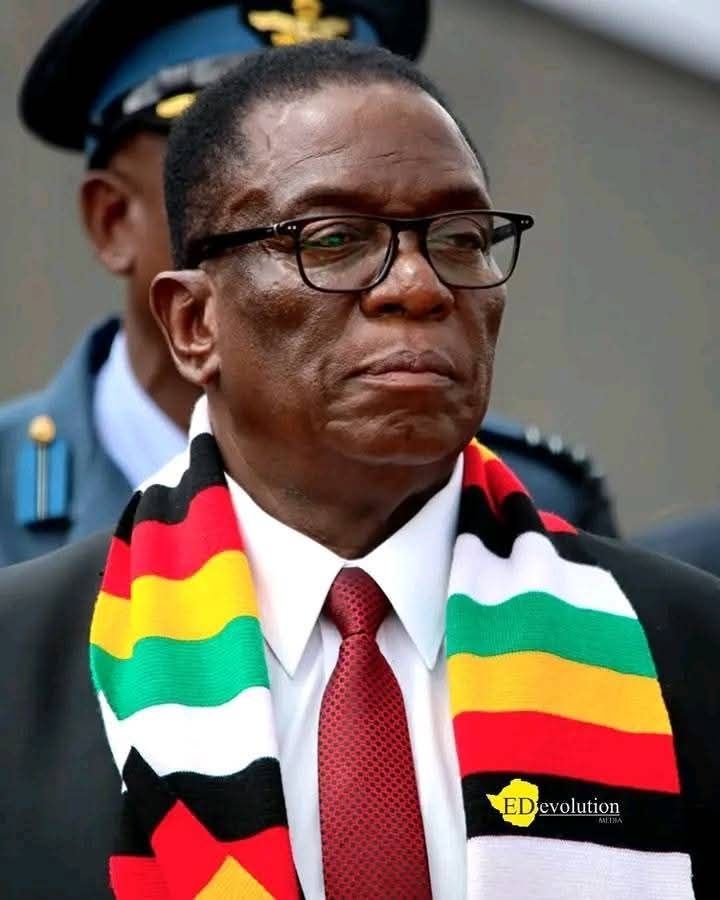
In what is becoming a disturbingly familiar pattern in Zimbabwean politics, the recent news of the near-completion of the Emmerson Dambudzo Mnangagwa Law School in the president’s hometown of Kwekwe has raised more than a few eyebrows.
To directly receive articles from Tendai Ruben Mbofana, please join his WhatsApp Channel on: https://whatsapp.com/channel/0029VaqprWCIyPtRnKpkHe08
Touted as a branch of Midlands State University and already being praised by government officials as a “national achievement,” the law school bears the name of a sitting president—paid for, not from his personal fortune, but by the hard-pressed Zimbabwean taxpayer.
To add to the peculiarity, there are increasing murmurs about a possible statue of President Mnangagwa being erected at the newly opened Trabablas Interchange, whose name—ironically—is said to be the president’s nom de guerre during the liberation struggle.
This raises fundamental questions about the logic and ethics of naming national institutions, roads, and public infrastructure after a sitting leader.
Isn’t this strange?
Why should a president, still in office, be at the center of such extensive self-glorification?
We witnessed the same trend under his predecessor, the late Robert Gabriel Mugabe, under whose rule nearly every major street in every city and town bore his name.
Hospitals, airports, and stadiums were renamed after him—even as his government presided over one of the worst economic meltdowns and human rights crises in modern African history.
What we’re seeing now is an eerie repetition of that history, as President Mnangagwa seems to follow the same path of self-immortalization, even before his legacy has been truly assessed by history.
What makes this practice particularly bizarre is that, in more democratic and civilized societies, it is customary for a leader to be honoured after leaving office—usually by those who come after them, based on merit, and after history has had its say.
Take the United States, for instance.
The Ronald Reagan Presidential Library or the George H. W. Bush School of Government at Texas A&M were named post-retirement.
Even in Africa, former South African President Nelson Mandela had institutions and landmarks named after him only after leaving office—and those were bestowed not by himself, but by the admiration of people, both locally and globally.
That kind of honour carries moral and symbolic weight.
It is the kind of recognition that is earned, not self-declared.
When a sitting leader insists—or passively allows loyalists to insist—on naming institutions, roads, and buildings after them, the optics alone speak volumes.
It reflects either an inflated sense of self-importance or an insecurity about one’s legacy—perhaps both.
Some leaders try to hide behind the thin veneer of plausible deniability, claiming that the naming is the decision of university councils or local authorities.
But we know how Zimbabwe works.
State universities are headed by Vice Chancellors and administrators whose loyalty to the president often outweighs their independence—after all, the president is chancellor of all state universities.
As for local government, even opposition-led councils are hamstrung by ZANU-PF ministers who wield excessive power over them.
So, let’s not pretend: these are decisions made to curry favour with the president, and in many cases, may well be encouraged—or quietly sanctioned—by him.
If Mnangagwa truly believes that he is doing an exceptional job as president, then why not wait for history—and for those who will come after him—to affirm that legacy?
Wouldn’t that be a more genuine and meaningful form of recognition?
When a leader honours himself, it amounts to self-congratulation, not legacy-building.
And that, in itself, hints at a deeper insecurity: the fear that history may not be so kind, that those who follow will not find much worth honouring.
But if that’s the fear, then the solution is not to build statues or stamp his name on public buildings—it’s to build a country that works.
Because here’s the uncomfortable truth: what makes Mnangagwa confident that these names will endure?
History is filled with examples of authoritarian leaders who named cities, airports, universities, and entire infrastructure after themselves—only for those names to be scrubbed clean the moment they fell from power.
Saddam Hussein renamed Baghdad International Airport to Saddam International Airport—it was promptly reversed after his fall.
Muammar Gaddafi adorned numerous institutions in Libya with his name—virtually none of those tributes survived after his violent ouster.
Romania’s Nicolae Ceaușescu had entire districts, grandiose buildings, and even ideological schools glorifying his persona—all of which were swiftly dismantled after his execution.
In the Soviet Union, the city of Stalingrad, named after Joseph Stalin himself, was renamed Volgograd after his cult of personality crumbled.
Besides, haven’t we already seen this play out in Zimbabwe—when the main street in Kwekwe, once named after Robert Mugabe, was abruptly renamed after Emmerson Mnangagwa following Mugabe’s removal from power?
These cases all share one trait: the legacy was not earned through service to the people, but forced through fear, propaganda, and unchecked ego.
And ultimately, forced memory does not endure—it is always rewritten by a free and liberated citizenry.
That is a lesson the Mnangagwa administration should learn.
All these institutions, roads, and buildings currently bearing his name may one day be renamed by a future government.
He cannot legislate or command genuine admiration—it has to be earned.
And to earn it, he needs to shift focus from symbolic self-worship to substantive national upliftment.
Let him start by improving the livelihoods of ordinary citizens.
Over 80% of Zimbabweans are currently living in poverty—a staggering and shameful statistic.
Why not dedicate his energy toward reversing that number?
Let him lead the charge against the rampant corruption that has become synonymous with his government.
Zimbabwe was recently rated as the most corrupt country in southern Africa, with a dismal Transparency International score of just 21 out of 100 in 2024.
That alone should be enough to prompt soul-searching and urgent reform.
Let him be remembered as the leader who finally brought to justice the corrupt elites, including those within his own circle, who are prejudicing Zimbabwe of over US$3 billion annually through shady public contracts, asset looting, and gold smuggling.
Let him fix our hospitals—not just central ones in Harare or Bulawayo, but rural clinics across the nation.
Let him ensure they are stocked with essential medicines, staffed with motivated personnel, and equipped to save lives.
Let our schools—especially in the countryside—be places of modern learning, with books, science labs, and computers, not crumbling structures with no chalk or chairs.
Let the president focus on rebuilding national hope.
Let him give our youth reason to dream again—by creating an economy where decent, well-paying, dignified work is the norm, not the exception.
Let him create an environment where people not only survive, but thrive.
If he can do this—if he can restore dignity, prosperity, and justice—then I can assure him, he won’t need to name anything after himself.
Zimbabweans will do it for him.
Streets, schools, hospitals, even newborn babies will bear his name—not out of fear, not out of political coercion, but out of genuine admiration and gratitude.
That is the kind of legacy that lasts.
Until then, naming institutions after himself only serves to highlight his doubt that such a legacy will ever materialize.
 TENDAI RUBEN MBOFANA - THE UN-OPPRESSED MIND!