Once again, the government hides behind numbers to sell a false reality.
A few days ago, the Zimbabwean government announced that it had revised the country’s Gross Domestic Product (GDP) upwards — from US$35.2 billion to US$44.4 billion.
To directly receive articles from Tendai Ruben Mbofana, please join his WhatsApp Channel on: https://whatsapp.com/channel/0029VaqprWCIyPtRnKpkHe08
On paper, this may sound impressive.
In fact, it might even suggest that the economy is growing and doing well.
But for the average Zimbabwean — who is struggling just to survive — such figures are largely meaningless.
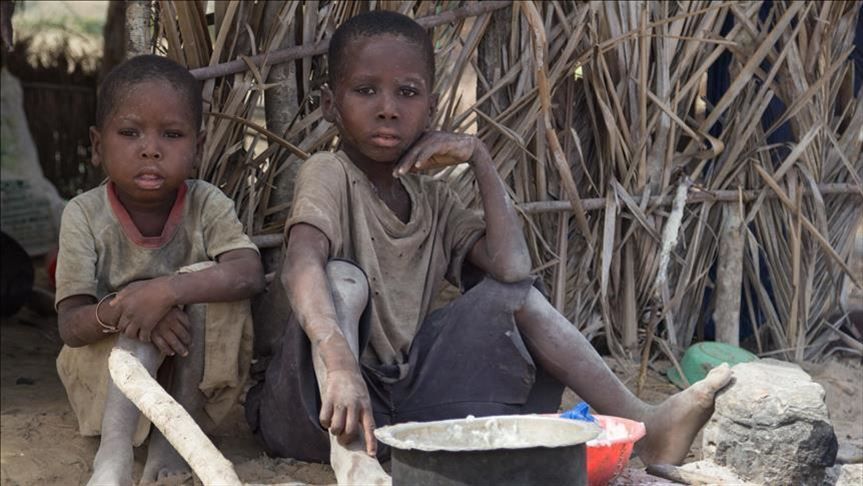
After all, what does a higher GDP matter to someone who can’t afford three meals a day, has no running water at home, endures 16-hour power cuts, and can’t find decent employment?
According to the Cabinet, the revision—based on the 2023 Economic Census by ZIMSTAT—is meant to reflect “expanded coverage” of economic activity since 2019.
And with this statistical adjustment, the government is now boldly declaring that Zimbabwe is on track to become an “upper middle-income society” by 2030.
But let’s be honest: GDP numbers do not reflect real progress if they fail to translate into improved livelihoods for the majority.
They are, at best, a technical indicator of the total output of goods and services within an economy.
They say nothing about who owns that wealth, who benefits from it, or whether it improves the lives of ordinary people.
And in a country where over 80% of the population lives in poverty, public hospitals are crumbling, millions rely on informal trade for survival, and civil servants earn salaries that can’t buy a week’s worth of groceries, the announcement of a higher GDP feels like a cruel joke.
The government claims that the new GDP figures show the economy is on a strong growth path.
Yet, this so-called growth has no meaningful impact on the average citizen’s life.
Yes, the government may have captured more economic data and included more entities that were previously undocumented.
But what exactly does that mean for the unemployed graduate selling airtime on the streets of Bulawayo, or the grandmother in rural Gokwe who walks 10 kilometers to fetch water from a muddy river?
For them, these “improved numbers” offer no relief.
We must also confront the question: Is this revision genuine reflection of economic expansion, or simply a convenient statistical adjustment to fit a political narrative?
It is notable that the announcement comes just as the government seeks to reinforce confidence in its Vision 2030 agenda—a dream to transform Zimbabwe into an “upper middle-income society” within the next five years.
This phrase has been repeated so many times by President Mnangagwa and his ministers that it has become a mantra.
And yet, when pressed for details, none of them can convincingly explain what such a society would actually look like for the ordinary citizen.
What exactly does an “upper middle-income society” mean in the Zimbabwean context?
Does it mean every household will have access to clean drinking water, electricity, and internet?
Does it mean decent healthcare in every village, where clinics are stocked with medicine and staffed by motivated, fairly paid workers?
Will our children learn in well-built classrooms with textbooks and access to computers, instead of sitting on the floor under trees?
Will families be able to afford decent meals every day, and will workers earn enough to buy homes, cars, or invest in their futures?
The truth is, the term “upper middle-income society” as used by the Mnangagwa administration is vague, opaque, and unmeasurable.
It is thrown around without a clear roadmap or baseline indicators.
Officials never define what social, economic, or infrastructural standards Zimbabweans should expect to see by 2030.
Instead, the term is used as a rhetorical tool to manufacture the illusion of progress and distract from the persistent and worsening hardships faced by the population.
There is no denying that in certain sectors like mining, agriculture, or telecommunications, there are signs of commercial activity.
But who is really benefiting from this growth?
The vast majority of Zimbabweans are still excluded from meaningful participation in the formal economy.
Informal trading remains the largest source of livelihood, not because it’s vibrant or innovative, but because formal job opportunities are virtually non-existent.
Youths are hawking sweets at traffic lights, nursing graduates are crossing borders to do menial jobs, and pensioners are being reduced to begging.
Meanwhile, a tiny elite connected to political power continue to enrich themselves through opaque tenders, gold smuggling syndicates, and land grabs.
This is not the portrait of an economy on the cusp of middle-income success.
It is the anatomy of a state captured by self-interest and run on propaganda.
Even when the government talks about increased per capita income—from US$2,259 to US$2,859 in 2023—it ignores the critical question of inequality.
Per capita income is an average; it says nothing about how income is distributed across the population.
A few billionaires at the top can skew the entire figure upwards, while the majority remain mired in destitution.
What matters more is median income, access to basic services, and quality of life.
None of those factors are addressed in this celebratory GDP announcement.
What we need from our leaders is not statistical theatre or fanciful labels.
We need tangible, measurable progress in people’s lives.
That means reducing poverty levels, increasing wages, and curbing the rampant corruption that bleeds the country of over US$3 billion annually.
That means ensuring every Zimbabwean has access to quality public healthcare, safe roads, affordable transport, and functioning infrastructure.
It means investing in modernising our education system, supporting smallholder farmers with inputs and markets, and creating stable jobs with living wages.
The obsession with GDP and “upper middle-income” rhetoric also dangerously masks the ongoing failure to address structural issues.
Inflation remains a major concern, the local currency is unstable, energy supply is erratic, and public institutions are underfunded and politicised.
The Auditor-General’s reports continue to expose massive looting in government ministries, yet there is no political will to prosecute the powerful individuals responsible.
How can we talk about progress while corruption and impunity flourish?
Zimbabwe’s future will not be secured by clever statistics or rebranded fantasies.
It will only be shaped by honest leadership, inclusive economic reform, and a genuine commitment to social justice.
Until then, GDP growth means little if it cannot put food on people’s tables, medicine in their clinics, and hope in their hearts.
As we approach 2030, what Zimbabweans need is not more inflated numbers or empty promises.
They need leadership that sees them—not as data points in a spreadsheet—but as real people with real struggles and real dreams.
If the Mnangagwa administration is serious about transformation, it must stop congratulating itself for figures that do not reflect reality, and instead focus on delivering the basics: jobs, justice, dignity, and development for all.
Only then can we start to talk meaningfully about middle-income status—not as a slogan, but as a shared national achievement.
 TENDAI RUBEN MBOFANA - THE UN-OPPRESSED MIND!