My heart sank as I read those words.
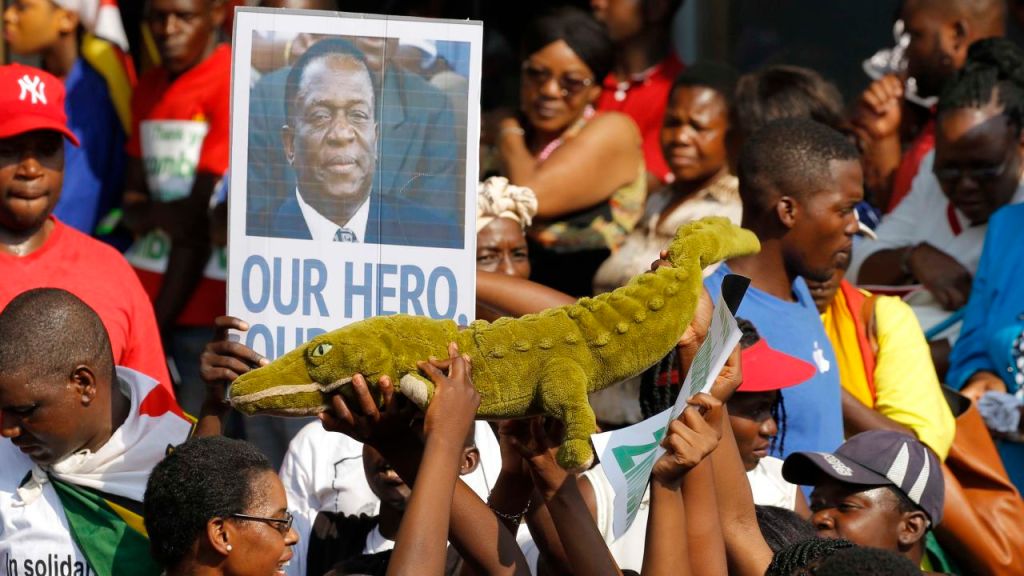
I recently came across a comment posted by a supporter of President Emmerson Mnangagwa on his official Facebook page.
It read: “It’s a great taboo to disclose your parent’s nakedness to neighbours. I reckon as bad to ever undermine your leadership. As long you are in office, you are our great leader, sir, your excellence. We are your subjects. And we greatly honour you for the great post that God has highly honoured you with.”
To directly receive articles from Tendai Ruben Mbofana, please join his WhatsApp Channel on: https://whatsapp.com/channel/0029VaqprWCIyPtRnKpkHe08
While such sentiments may appear rooted in cultural respect or religious reverence, they reflect a deeply worrying misunderstanding of the nature of governance in a modern democratic society.
We are no longer living under monarchies or theocratic rule, where leaders were divinely appointed, unchallengeable, and the people merely subjects expected to obey without question.
Zimbabwe is—at least constitutionally—a democratic republic, where the power ultimately belongs to the people.
Leaders are not kings.
They are not infallible demigods.
They are elected public servants, entrusted with authority for a limited time, and accountable to the very people who put them in office.
The analogy of not exposing a parent’s “nakedness” to outsiders may make sense in the context of family or tradition.
But applying it to governance is not only inappropriate—it is dangerous.
Leaders are not our parents.
They are not family elders who must be obeyed at all costs out of loyalty or cultural obligation.
They are public officials whose actions must constantly be scrutinized to ensure that they are acting in the interest of the people.
If they err, we have not only the right but the duty to speak out.
Failure to do so is how dictatorships are born and tyranny sustained.
There is a persistent, toxic narrative within our political culture that questioning those in power is somehow an act of betrayal.
That calling out corruption, misgovernance, or incompetence is tantamount to undermining national unity or being “unpatriotic.”
But in truth, the greatest form of patriotism is holding your leaders accountable.
True patriotism is not singing praises while the nation burns.
It is not clapping hands for those looting public funds.
It is not defending leaders who impoverish the citizenry while enriching themselves and their cronies.
Real patriotism lies in demanding better, in expecting transparency, and in standing up for justice even when it is uncomfortable.
Blind loyalty breeds impunity.
It allows those in power to act without fear of consequences.
It creates an environment where corruption festers, where public resources are misused, and where the suffering of the people is masked by artificial praise and forced allegiance.
When citizens become cheerleaders rather than watchdogs, governance deteriorates.
The economy collapses.
Social services fail.
The powerful become untouchable, while the masses wallow in poverty.
And we see this reality all around us in Zimbabwe today.
Those who dare criticize the president or question the government are often labeled as sellouts, enemies of the state, or even agents of foreign powers.
Yet these critics are not enemies of Zimbabwe—they are patriots demanding accountability.
They are the ones who care enough to speak out—to question why billions disappear from public coffers, why hospitals lack basic medicines, why children sit on classroom floors without textbooks, and why public servants are paid wages too meagre to sustain a dignified life.
Meanwhile, some among us continue to offer sycophantic praise, defending indefensible failures, and equating leaders with divine authority.
This culture of cult-like reverence is incompatible with democratic governance.
In a democracy, a president is not “His Excellency” in the divine sense.
He is not chosen by God.
He is chosen by the people—and the same people have every right to question, challenge, and even remove him when he fails to deliver.
Even more troubling is how religion is increasingly being used to shield leaders from accountability.
The claim that someone is “honoured by God” and therefore should not be questioned is a distortion of faith.
Scripture itself is filled with prophets who challenged unjust rulers and spoke truth to power.
Jesus boldly confronted the leaders of his time who oppressed the people.
He called out their hypocrisy and greed, highlighting how they burdened ordinary people with harsh rules while failing to show true justice and compassion.
His teachings show that genuine faith requires courage to challenge injustice, especially when it comes from those in positions of authority.
This serves as a powerful reminder that leaders must be held accountable and that blind loyalty is not the way of true service.
If anything, true faith requires us to confront injustice—not to bow before it.
Let us also reflect on the absurdity of calling ourselves “subjects” in a republic.
The term itself implies submission to a sovereign ruler, not equal citizenship in a participatory democracy.
We are not subjects.
We are citizens—equal stakeholders in the affairs of our country.
And citizenship comes with rights: the right to speak, the right to demand better, the right to protest, the right to vote, and the right to question.
To suggest that leadership should never be questioned simply because one holds office is to suggest that elections, oversight, and the constitution itself are meaningless.
It is to say that once in power, a leader is untouchable, unquestionable, and invincible.
That is not democracy.
That is autocracy dressed in the robes of respectability.
The struggle for Zimbabwe’s independence was fought not so we could become loyal subjects of a new political elite, but so we could become free citizens—masters of our own destiny.
Let us not betray that legacy by cowering before those who should be accountable to us.
Let us not trade the chains of colonial rule for the shackles of political worship.
Respecting leaders should never mean suspending critical thought.
Loyalty should never mean silence in the face of wrongdoing.
We must return to the core principles of democracy: government by the people, for the people, and answerable to the people.
Zimbabwe will not move forward if its citizens fear to speak out.
It will not prosper if truth is suppressed in the name of loyalty.
It will not be free if we continue to act like subjects when we are meant to be citizens.
The true test of leadership is not how loudly people praise you when you are in power—but how much they are free to question you, correct you, and hold you accountable without fear.
Let us never forget: in a democracy, silence is not golden—it is dangerous.
 TENDAI RUBEN MBOFANA - THE UN-OPPRESSED MIND!