It’s all too easy to grow comfortable with complaining about a situation—while doing nothing to change it.
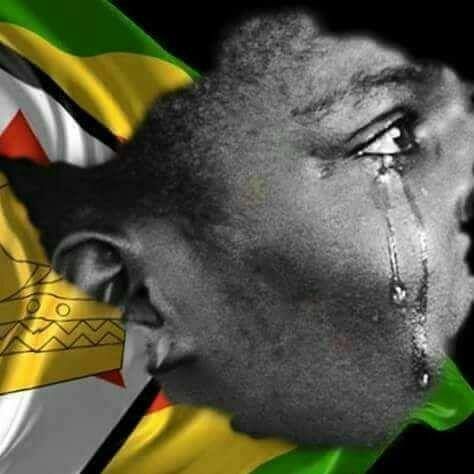
In my social justice advocacy work and writing, I have had the privilege of hearing from hundreds of Zimbabweans across the country.
To directly receive articles from Tendai Ruben Mbofana, please join his WhatsApp Channel on: https://whatsapp.com/channel/0029VaqprWCIyPtRnKpkHe08
Some write to me after reading my articles, others call, and many approach me on the streets when they recognize me.
What they all share is a deep and growing frustration with the ever-deteriorating state of our nation.
Their voices are united by a common cry: enough is enough.
People are angry. Rightly so.
They are tired of waking up each day only to be reminded of their poverty, hopelessness, and the sheer indifference of those in power.
They are exhausted from trying to survive in a country where corruption has become so deeply entrenched that it is no longer even hidden.
It is now conducted in the open, with astonishing brazenness, as if those looting public coffers no longer care who sees them or what anyone thinks.
We have all seen it.
The awarding of questionable public contracts—often without public tender and at outrageously inflated prices—to a select few with political connections.
We have witnessed the dubious acquisition of state assets under murky, unexplained circumstances.
Even more insultingly, the beneficiaries of this plunder do not hide.
They flaunt their ill-gotten wealth in the faces of a broken, struggling population.
They parade luxury cars, designer clothes, and grand mansions—gleaming symbols of corruption—in front of a people who cannot afford a decent meal, school fees for their children, or basic medication in crumbling hospitals where even a painkiller must be bought from outside.
It is this disparity that pains the soul of any patriotic Zimbabwean.
The people who reach out to me do not ask for luxury or handouts—they just want fairness, accountability, and a chance at a dignified life.
They want an end to the looting.
They want those responsible to be held accountable.
They want justice.
One man I spoke with this morning expressed his disgust that those in power today rose to prominence by claiming they were “removing criminals” surrounding then-president Robert Mugabe.
His words were filled with a deep sense of betrayal and disillusionment.
My answer to him was blunt but honest: criminals around Mugabe simply removed him so they could now steal without restraint.
Let me be clear: I was never a supporter of Mugabe.
His brutal repression of the people and the destruction of democratic institutions is what pushed me into the trenches of social justice work.
But under the leadership of President Emmerson Mnangagwa, we have witnessed corruption reach a level that makes Mugabe’s era look almost restrained.
The impunity is staggering.
Those in power today behave as though they are untouchable, accountable to no one, and shielded from the consequences of their actions.
And so far, they have been right—because we, the citizens, have not stood up.
One question I am constantly asked is: “When will this suffering and looting end?”
My answer never changes: it will end the day we as Zimbabweans decide to stand up for ourselves.
It will end the moment we refuse to be silenced, intimidated, or pacified with crumbs.
It will end when we realize that criminals never stop on their own accord—not when they are allowed to loot freely and comfortably while the victims remain passive.
Let us not fool ourselves with false hopes.
If we are expecting those in power to suddenly have a change of heart and voluntarily stop their corrupt activities, we are living in a fantasy.
There will be no magical epiphany or road-to-Damascus moment.
President Mnangagwa himself has made that crystal clear through his repeated taunts of the Zimbabwean people.
His infamous statement, “vachingovukura, isu tichingotonga” (they will continue barking while we keep ruling), was not just a dismissive jab—it was a declaration of how little he fears public outcry.
And to be fair, why should he fear it?
What have we done to show that our “barking” will ever translate into “biting”?
We complain in our homes, we grumble at street corners, we curse the government on social media.
Yet we are never willing to take real, collective action.
As long as our frustration stays confined to whispers and murmurs, nothing will change.
In fact, things will get worse.
Think of it this way: if a thief breaks into your house and you do nothing—no resistance, no police report, no community alert—what reason would he have to stop?
Would he not return again and again, emboldened by your silence and inaction?
That is exactly the situation we face in Zimbabwe.
The looters in government see our resignation as permission.
They see our silence as complicity.
And so, the question is no longer just about when the looting will stop.
It’s about when we will decide that enough is enough.
Real change requires courage.
It requires unity.
It requires us, the ordinary people of Zimbabwe, to move beyond anger and despair and take action.
Not violent action—violence only destroys and weakens us further—but organized, principled resistance.
We must begin to mobilize ourselves in our communities, across cities, towns, and rural areas.
Not as pawns of political parties, which too often have their own narrow agendas, but as citizens united by shared suffering and a common goal.
We must be clear-eyed in our understanding that no one will save us but ourselves.
No knight in shining armour is coming.
We are the ones we’ve been waiting for.
This is a call for collective civic awakening.
Let us begin to organize peaceful resistance, demand transparency, confront local officials, boycott corrupt businesses, and hold community discussions that birth real strategies.
We must name and shame the corrupt, expose their networks, and build alliances that transcend tribe, class, or political affiliation.
Our pain should be the thread that binds us—not divides us.
If we fail to act now, we will wake up one day in a country we no longer recognize, where our silence has become the grave of our freedom and the seal of our oppression.
The people I meet in my work do not lack passion, intelligence, or clarity.
They know what’s wrong.
They know what must be done.
What is missing is that final step—the courage to stand.
And so, I return to that question I am asked daily: when will this suffering end?
It will end the day we rise—not to bark—but to bite. Peacefully, powerfully, and together.
 TENDAI RUBEN MBOFANA - THE UN-OPPRESSED MIND!