Have we become more docile than the fearless generation that came before us?
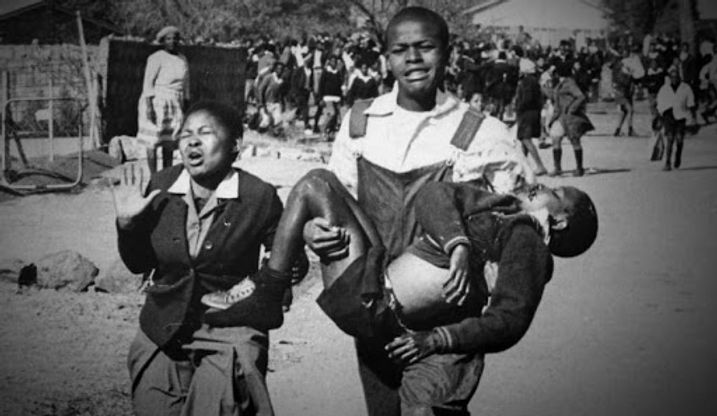
As Zimbabwe joins the rest of the continent in commemorating the International Day of the African Child, we are reminded of the fearless youth of Soweto who, on 16 June 1976, rose against apartheid’s injustice.
To directly receive articles from Tendai Ruben Mbofana, please join his WhatsApp Channel on: https://whatsapp.com/channel/0029VaqprWCIyPtRnKpkHe08
Hundreds were massacred by the South African Police, but their defiant spirit reverberated across the globe—eventually shaking the foundations of white minority rule.
Similarly, in the 1960s and 70s, countless Zimbabwean youths—some as young as 15—crossed borders into Mozambique and Zambia for military training to confront colonial Rhodesia.
Yet, as we reflect in 2025, the obvious question arises: What happened to that revolutionary spirit in today’s Zimbabwean youth?
Why do so many of our young people appear indifferent to their own suffering in a country where the future has been looted before their very eyes?
Why is there such widespread silence and inaction while Zimbabwe’s rulers preside over the destruction of the same dreams that inspired a generation to fight colonial oppression?
Today’s youth inherit a country where unemployment is the norm, regardless of qualifications.
Drug abuse has reached epidemic levels, with powerful elites suspected of complicity in the illicit trade.
Corruption is entrenched, with over US$3 billion lost annually through illicit financial flows, while poverty deepens.
The 2023 Al Jazeera documentary Gold Mafia exposed a sinister world of gold smuggling and state-enabled looting involving high-profile individuals closely linked to power—including Ambassador-at-Large Uebert Angel and convicted smuggler Ewan Macmillan, who directly implicated the highest offices in the country.
Meanwhile, ordinary youths are forced into street vending, prostitution, and criminality to survive in an economy rigged against them.
Yet, most remain docile—perhaps anesthetized by disillusionment, fear, or misinformation.
One explanation lies in the systemic deconscientization of our youth.
Much like under colonial rule, today’s generation has been socialized into believing that poverty, repression, and state brutality are “normal.”
Just as past generations rationalized racial segregation, today’s young people rationalize economic injustice and political suppression.
This is no accident.
The ruling elite knows that an aware, empowered youth is a threat to their grip on power.
The deliberate underfunding of education, the silencing of alternative voices, and the absence of civic education in schools all serve to produce a generation that does not question.
Even in households, discussions about politics or governance are often discouraged for fear of state reprisal.
Corruption has eaten deep into the soul of Zimbabwe’s education system.
Many schools, particularly in rural areas, are rundown and lack the most basic of learning materials—books, furniture, and proper buildings.
Modern technologies, science laboratories, even simple libraries are a luxury.
Most of these schools don’t have electricity or piped water, and sanitation facilities are in a deplorable state.
Teachers, who should be the architects of the nation’s conscience, are grossly underpaid and demotivated.
Those deployed to rural areas endure inhumane living conditions, often without decent accommodation or transport, which drives trained and experienced educators to shun these placements—leaving students at the mercy of inexperienced or unqualified teachers.
It is no surprise, then, that Zimbabwe has never achieved an Ordinary Level pass rate of over 30%.
Some rural schools continue to record 0% pass rates.
That alone should be enough to send shockwaves through the nation—but there is no outrage.
Thousands of children drop out of school every year, unable to pay fees.
In 2024 alone, over 50,000 learners were forced to abandon their studies—driven largely by poverty, which has left many parents unable to afford school fees, pushed vulnerable girls into early marriages or transactional relationships with older men, and plunged countless youths into drug abuse as they struggle to cope with growing hopelessness and despair.
These are not just statistics—they are dreams cut short, talents wasted, and futures stolen.
What makes this even more painful is the betrayal that follows after school.
Those few who manage to complete their studies enter a hostile economy, devoid of real opportunities.
Most are pushed into street vending, illegal artisanal mining, or cross-border hustling.
A lucky few find passage into the diaspora.
But for the majority left behind, it’s a bleak existence.
And still, they are not angry.
Why are they not outraged that those close to power are swimming in vulgar wealth, becoming instant millionaires through shady tenders, procurement scandals, and looting of state assets?
These “tenderpreneurs”—or “Zvigananda,” as they are called—flaunt their stolen wealth unashamedly, cruising in luxury cars, dining in exclusive restaurants, while public schools collapse and hospitals run dry.
They send their own children to elite private schools or abroad, all paid for by taxpayers, while ordinary Zimbabwean students share tattered textbooks, sit on the floor, and learn under trees.
Why are our youth not rising in protest that a so-called “businessman” can be handed R800 million (about US$42 million) of public funds for doing absolutely nothing, while schools have no chairs, no science labs, and no chalk?
Why are they not angry that this same money could have built hundreds of well-equipped schools, paid decent salaries to teachers, and given children a fair shot at a decent life?
This is why conscientization—once a revolutionary tool used by teachers, churches, and political leaders—must be revived.
In the 1992 movie Sarafina!, we saw how the character Mary Masembuko, a teacher played by Whoopi Goldberg, inspired her students to understand their reality and rise against injustice.
Zimbabwe needs such educators and mentors again—those who will teach children the real history of our nation, beyond the glorified narratives peddled by ZANU PF.
Our youth must be taught to critically examine whether the land reform program fulfilled its promise of equitable ownership, when the daughter of former President Robert Mugabe reportedly owns 21 farms, while millions still live on infertile land.
They must ask why the wealth of the nation—particularly minerals—is benefitting only a connected few, as billions are looted while hospitals lack medicines and schools collapse.
They must question whether democracy truly exists, when opposition parties are criminalized, elections are rigged, and protesters are gunned down—as happened on 1 August 2018 and 14 January 2019.
Let’s be clear: Zimbabweans are still shackled—not by foreign colonialists, but by local elites who have become new oppressors, hiding behind the blood-stained flag of liberation.
In 2025, with inflation once again soaring, the local currency collapsing, and more than 80% the population living in poverty, it is unconscionable for the youth to remain silent.
We need a new wave of activism, one that does not necessarily rely on armed struggle or violence—but on mass awareness, strategic resistance, civic participation, and the use of digital platforms to expose corruption and amplify calls for accountability.
The youth must rise with urgency.
They must understand that no one is coming to rescue them.
It is their future on the line.
If they do not fight for it, it will be lost forever.
Let June 16 not just be about remembering Hector Pieterson or watching Sarafina! For the hundredth time.
Let it be a spark that ignites a new generation of young Zimbabweans who are awake, angry, and active.
The revolutionary spirit may be dormant, but it is not dead. It simply needs to be awakened.
 TENDAI RUBEN MBOFANA - THE UN-OPPRESSED MIND!