My article yesterday attracted significant interest.
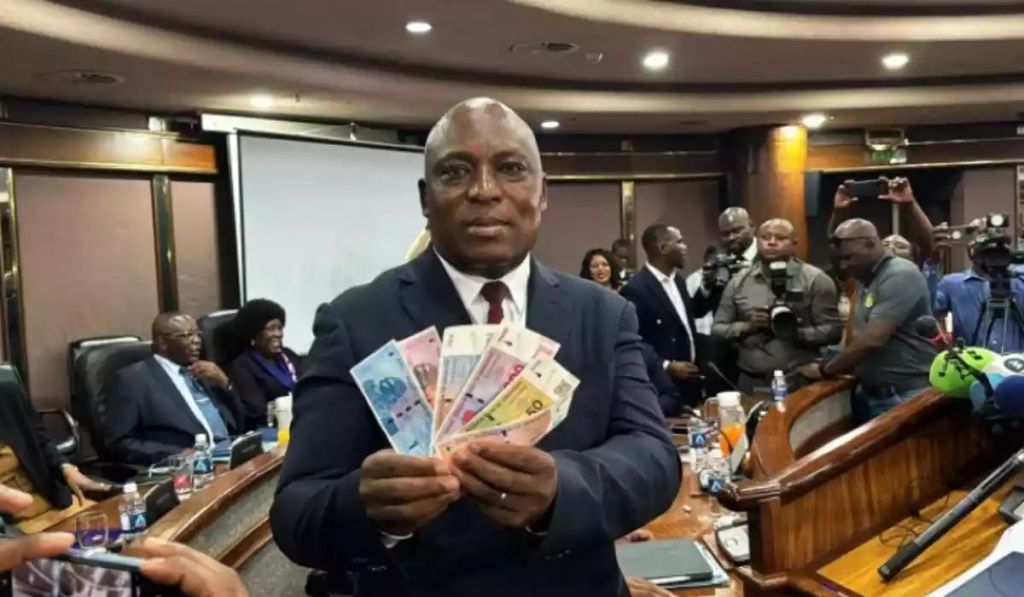
Following “If the ZiG is so stable, why won’t the world accept it?”, I received numerous responses — some agreeing with my concerns, while others argued that the Zimbabwe Gold (ZiG) has indeed shown remarkable stability over the past year.
They pointed to corporate earnings reports and official statements highlighting the currency’s apparent firmness against the US dollar.
But this surface-level calm deserves closer scrutiny.
Is it a sign of genuine recovery — or merely the latest illusion in a long line of state-manufactured monetary mirages?
The Zimbabwe Gold (ZiG) currency, introduced with fanfare in April 2024, has been hailed by some as a symbol of a turning point in the country’s perennial currency crisis.
To directly receive articles from Tendai Ruben Mbofana, please join his WhatsApp Channel on: https://whatsapp.com/channel/0029VaqprWCIyPtRnKpkHe08
Corporate earnings statements and selective official narratives are quick to point to its “stability” against the US dollar as a sign of economic recovery.
But beneath this fragile façade lies a troubling truth: the ZiG’s stability is neither organic nor sustainable — it is the product of state-engineered scarcity, coercive policies, and manipulated optics.
Zimbabwe has a long and painful history with failed currencies, from the bearer cheques of the 2000s to the infamous Bond Note and later the RTGS dollar.
Each of these currencies followed a predictable trajectory: artificial strength at inception, often bolstered by legal force and propaganda, followed by an inevitable collapse under the weight of public distrust and weak fundamentals.
The ZiG is walking that same perilous path, albeit with a more sophisticated costume.
The illusion of stability has been achieved primarily through administrative force rather than market confidence.
The government and the Reserve Bank of Zimbabwe (RBZ) have tightened liquidity by severely restricting the supply of ZiG in the economy.
This makes foreign currency appear more available on the formal market and limits speculative pressure — but it also means the ZiG is barely in circulation and is not being tested under normal transactional volume.
You cannot claim a bridge is stable if no one is allowed to walk on it.
Compulsory surrender requirements have forced exporters to convert large portions of their earnings into ZiG at officially determined rates.
Government services, taxes, and fees are increasingly being denominated in ZiG, creating a controlled demand that masks the lack of voluntary use.
This is not a reflection of faith in the currency’s store-of-value function — it is an economy moving under duress.
Ordinary citizens and business owners have not forgotten the economic trauma of past currency collapses.
They remember waking up to find their life savings turned to dust overnight.
As a result, there is a clear behavioral pattern: Zimbabweans who are forced to earn in ZiG — through local currency salaries and other incomes — would much rather hold onto their US dollars as a safer store of value, while quickly disposing of the ZiG out of fear that it could lose value at any moment.
This creates an artificial surge in ZiG usage, not driven by confidence, but by necessity and fear.
The result is a misleading appearance of widespread acceptance and transactional use, when in reality, the local currency is widely viewed as a liability, not an asset.
Even government itself — including senior officials and connected business elites — continues to operate largely in foreign currency, revealing a stark contradiction.
Many of these elites own fuel stations and other businesses that reject the ZiG altogether, charging exclusively in US dollars.
This further exposes the lack of confidence in the local currency at the highest levels, while ordinary Zimbabweans are left to grapple with a currency they neither trust nor freely choose to use.
If the architects of the ZiG have no real trust in it, why should the public believe in it?
Supporters of the ZiG have also pointed to the presence of the International Monetary Fund’s Staff Monitored Programme (SMP) as evidence of responsible reform.
But this, too, is largely a matter of optics.
The SMP is not a financing arrangement — it provides no financial assistance but rather tracks Zimbabwe’s self-declared reform agenda.
While some of the technical advice has been useful, particularly in limiting quasi-fiscal spending and promoting more transparency at the RBZ, the programme has no enforcement mechanisms.
Its success depends entirely on political will, which remains inconsistent at best.
Indeed, the Zimbabwean government appears to be wearing the SMP like a borrowed suit — neat and presentable to creditors, but ill-fitting and quickly abandoned when inconvenient.
Playing the “good boy” for the IMF may improve the country’s chances of future re-engagement, but without genuine reform and accountability, it’s a hollow performance.
What Zimbabwe’s monetary authorities have failed to grasp — or perhaps deliberately ignored — is that no currency can succeed without public trust.
Trust is not manufactured in press statements or tightly managed exchange rates.
Nor is it built by cracking down on informal foreign currency traders, who are merely responding to the distortions and inefficiencies created by the state itself.
Arresting small-time traders does nothing to restore confidence — if anything, it reinforces the perception that the system is broken and propped up by fear rather than sound economics.
Trust is earned through transparency, fiscal discipline, rule of law, and real production that backs the currency with value.
Zimbabwe’s economy remains heavily reliant on imports, smuggling is rampant, corruption is unchecked, and political interference in monetary affairs continues to erode institutional credibility.
There is also the inconvenient truth that the ZiG is not backed by a functioning gold standard.
While authorities have claimed it is anchored by reserves of gold and foreign currency, there is no independent audit of those reserves, no public disclosure of their exact quantities, and no mechanism for citizens to redeem ZiG for gold or any hard asset.
In effect, the so-called backing exists only on paper — a vague promise from a central bank that has repeatedly failed the test of public accountability.
Furthermore, as Zimbabwe moves closer to general elections, we must brace for the likely surge in government spending, civil service salary hikes, and politically motivated subsidies — all of which will exert pressure on the currency.
We’ve seen this before: short-term political goals trumping long-term economic sense.
Without strict controls and independent oversight, the ZiG is unlikely to survive a full electoral cycle without facing the same fate as its predecessors.
The idea that a currency can be willed into success without addressing the rot that has undermined its predecessors is pure fantasy.
Monetary reform cannot be isolated from political reform.
You cannot stabilize a currency in a fundamentally unstable political and governance environment.
Zimbabweans know this.
That is why they instinctively run to the dollar — not because they love the United States, but because the dollar represents something their own government has repeatedly failed to offer: predictability and protection from chaos.
In the final analysis, the ZiG is a symbol — not of progress, but of the state’s enduring refusal to face the real problems head-on.
Its so-called stability is a mirage constructed in the desert of a broken economy, and as the sun rises higher, the illusion will vanish.
The question is not whether the ZiG will collapse, but when — unless the country undergoes a radical shift in how it manages public finances, upholds transparency, restores trust, and embraces genuine reform.
Until then, Zimbabweans must remain vigilant and refuse to be fooled by the same tricks repackaged under a new name.
A currency does not succeed because it is launched.
It succeeds because the people behind it are trustworthy — and the systems that support it are sound.
Sadly, that remains far from reality.
 TENDAI RUBEN MBOFANA - THE UN-OPPRESSED MIND!