The Zimbabwe regime loves building castles in the air!
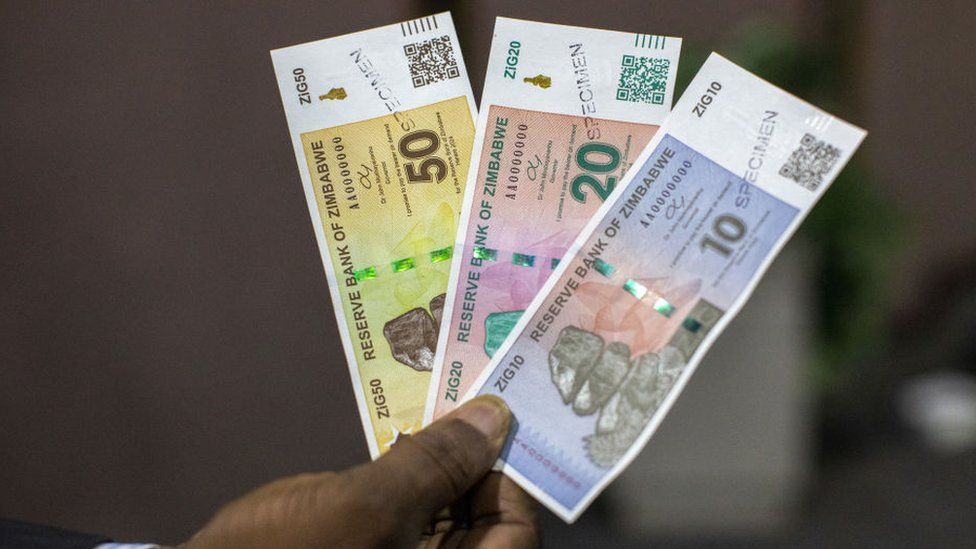
The Reserve Bank of Zimbabwe (RBZ) recently announced what it claims is a major milestone in stabilizing the country’s currency.
According to its latest report, Zimbabwe’s foreign currency reserves — backing the Zimbabwe Gold (ZiG) currency introduced last year — surged past US$600 million by the end of March 2025, up from just US$270 million in April 2024.
The RBZ proudly declared that this reserve base is more than enough to fully cover all ZiG bank deposits, effectively insulating the currency from global financial shocks.
This, we are told, is a major step toward building confidence in the ZiG and restoring economic stability.
To directly receive articles from Tendai Ruben Mbofana, please join his WhatsApp Channel on: https://whatsapp.com/channel/0029VaqprWCIyPtRnKpkHe08
The Reserve Bank of Zimbabwe never misses an opportunity to boast about the “success” of the ZiG.
Supposedly backed by gold and foreign currency reserves, the RBZ Governor has gone to great lengths to portray the ZiG as a stable and reliable medium of exchange.
But for all the noise and state-sponsored fanfare, the question that Zimbabweans continue to ask — and rightly so — is: if this currency is truly stable and backed by real assets, why does the rest of the world refuse to recognize or accept it?
There is a glaring contradiction between the official narrative and the lived experience of Zimbabweans.
You will not find the ZiG quoted on global foreign exchange platforms such as Bloomberg, Reuters, or XE.
It simply does not exist in the real financial world beyond our borders.
While other minor regional currencies like the Botswana pula or the Zambian kwacha are readily tradable and quoted internationally — despite lacking any so-called gold backing — Zimbabwe’s currency remains conspicuously absent.
That alone should be a serious indictment of the ZiG’s credibility and acceptability.
In fact, if one were to take a bundle of ZiG cash — say ZWG100,000 — to a bank in Johannesburg, Lusaka, or London, and attempt to exchange it for rands, kwacha, or pounds, they would be laughed out of the building.
The currency is unacceptable.
This is not just a matter of international perception; it’s a practical indicator of whether a currency is considered legitimate and trustworthy.
And right now, the world is saying “no” to the ZiG.
The RBZ insists the ZiG is backed by reserves.
But what does that mean to ordinary citizens?
In a genuine gold-backed system, people should be able to exchange their currency for a fixed amount of physical gold, offering real assurance of its value — not just symbolic claims.
Is this gold and cash backing independently audited and verifiable?
Without transparent, independently verified audits, such declarations are impossible to trust.
Are Zimbabweans able to exchange ZiG for actual gold as the name suggests?
No — there is no facility that allows the public to redeem ZiG for physical gold, which defeats the very principle of a gold-backed currency.
The so-called reserves are shrouded in secrecy, with no public accountability.
This raises serious concerns about whether the gold-backing is genuine or merely symbolic — a public relations stunt designed to lull citizens into a false sense of confidence.
If the gold is real, and the reserves are intact, then why is there no transparent mechanism for the public to verify or interact with these reserves?
Worse still, the limitations of the ZiG are not confined to the international arena.
Even within Zimbabwe, the currency is not fully accepted.
You cannot use ZiG to buy fuel at virtually all service stations, where transactions are exclusively in US dollars.
This exposes the double standards and hypocrisy of a government that preaches faith in its own currency but simultaneously allows essential sectors — like energy — to operate in foreign currency.
And there is no serious effort by authorities to compel them to accept it.
It gets more insulting.
When Zimbabweans need passports — one of the most fundamental documents for identification and mobility — they are expected to pay in US dollars.
The company contracted to handle this service, which is understood to be closely linked to the political elite, charges exclusively in hard currency.
This is despite the fact that passport issuance is a state service and should reflect confidence in the national currency.
What message does this send to the public?
That the same people forcing the ZiG onto citizens do not themselves trust or use it in critical sectors they control?
It is this very hypocrisy that is enraging many Zimbabweans.
We are told our economy is recovering and stabilizing.
We are told we have a gold-backed currency.
Yet we are living in a country where our own money is not only useless abroad but rejected at home in key transactions.
Why should ordinary people have faith in the ZiG when the ruling elite, through their actions, show none?
Even more telling is how the country’s own top leadership treats the ZiG.
When the president publicly rewards individuals who have pleased him — such as artists performing at ruling party rallies — the gifts are always in US dollars, never in ZiG.
The same applies to controversial figures like tenderpreneur Wicknell Chivayo, who is often seen flaunting his wealth and handing out stacks of cash to influencers, musicians, and socialites — all in US dollars.
Not once has he ever flashed or distributed ZiG notes.
This sends a powerful message: even those closest to power, those entrusted with shaping the economy and defending the national currency, clearly do not use or believe in it.
What, then, should ordinary Zimbabweans make of the ZiG, when its supposed champions don’t lead by example?
It’s about trust, or more precisely, the total absence of it.
Trust is the cornerstone of any economy.
A currency is only as strong as the belief people have in its value.
When citizens, businesses, and the global community reject a currency, it ceases to function as a true store of value or medium of exchange.
The ZiG, in its current form, is struggling to inspire that belief.
If the RBZ Governor genuinely believes the ZiG is stable and credible, let us see it appear on international forex markets.
Let us see it accepted in banks abroad.
Let us see it buying fuel and paying for passports in Zimbabwe.
Let us see government officials proudly using it for everything — from shopping to medical bills to public services.
Until then, these proclamations about stability mean nothing.
Zimbabweans are not stupid.
They know when they’re being sold a fantasy.
And right now, the ZiG is less a sign of economic sovereignty than it is a symbol of a deeply broken and dishonest system — one where the powerful craft illusions while insulating themselves from the realities they impose on the rest of us.
 TENDAI RUBEN MBOFANA - THE UN-OPPRESSED MIND!