This is a painful article to write.
There’s a creeping shame that often grips me, deep and almost unspeakable.
It rises whenever I hear former Rhodesians gloat, with a vindicated smirk, about how they always knew we couldn’t govern ourselves.
Their condescending “I told you so”s sting not because they are right, but because those in power in Zimbabwe have done everything possible to make their colonial prophecies appear like foresight.
The collapse of Zimbabwe’s public services, the looting of national resources, and the grotesque wealth disparity between the ruling elite and the rest of the population have done more to undermine the image of black self-governance than any colonial propaganda ever could.
To directly receive articles from Tendai Ruben Mbofana, please join his WhatsApp Channel on: https://whatsapp.com/channel/0029VaqprWCIyPtRnKpkHe08
What we are witnessing today is not just the failure of a post-colonial government—it is the slow erosion of our collective dignity as black people.
The Mnangagwa regime, through its brazen corruption and moral bankruptcy, is unwittingly validating every colonial stereotype ever peddled about Africans.
The world once spoke of the “White Man’s Burden”—a vile colonial belief that Africans were uncivilized and incapable of leading themselves, thus requiring the benevolent hand of European rule.
There were racist theories of savagery and underdevelopment, claims that black people lacked the intellect or discipline to manage modern governance.
These were the ideological weapons of imperialism.
They were lies—malicious lies that we were meant to debunk through our liberation and our exercise of statehood.
But how do we defend ourselves now, when 45 years after independence, the country looks like a living, decaying prophecy of Ian Smith?
There’s a quote widely attributed to the former Rhodesian prime minister: “If blacks are to rule themselves, people in towns will walk on sewage until they believe it’s normal.
“All the gains from colonization will vanish. Infrastructure will collapse. Roads will be impassable. Trains will kill people until they’re abandoned as an unsafe mode of transport. Hospitals will be closed.
“Farms will be grabbed and nothing to feed the people.”
Whether Smith actually said this or not is almost irrelevant.
What matters is how painfully accurate it reads today.
Our towns are indeed overflowing with raw sewage, a health hazard normalized by a defeated people.
Our infrastructure is in ruins—roads potholed beyond recognition, some like the vital Bulawayo to Victoria Falls route virtually impassable.
Who can forget that viral video of a bus navigating a crater so massive it looked like a swimming pool?
This isn’t an isolated incident. It is the image of a nation fallen into infrastructural paralysis.
The railway system, once the pride of Southern Africa, is now a ghost of its former self.
Train derailments have become routine, so frequent and deadly that the railway is now a threat rather than a service.
Furthermore, the National Railways of Zimbabwe (NRZ) has been driven into the ground through years of gross mismanagement, entrenched incompetence, and rampant corruption.
What was once a symbol of industrial efficiency and national pride has been reduced to a crumbling relic—its locomotives largely grounded, tracks decaying, and workers demoralized—yet another casualty of a regime that thrives on looting rather than leadership.
Furthermore, the Nationals Railways of Zimbabwe (NRZ) has been run into the ground though massive mismanagement, incompetence and corruption.
Public hospitals—those supposed sanctuaries of healing—have morphed into death traps.
There are barely any cancer machines, no functioning dialysis centers for the majority, no ambulances to ferry the critically ill.
Surgical theatres are under-equipped.
Basic medications are chronically out of stock.
These are no longer institutions of healing but grim corridors of hopelessness.
Yet, amid this decay, the ruling elite live in obscene luxury.
Their children attend elite schools abroad—ironically, in the very countries we fought to free ourselves from.
They seek medical care in Singapore, India, and Dubai.
They host lavish weddings, throw money at luxury cars, and holiday in private jets while millions at home starve and suffer.
Even schools that were well-equipped and reserved for whites during colonial times have now been reduced to skeletal remnants, lacking textbooks, desks, and even toilets.
The looting of national resources has reached industrial proportions.
Billions vanish through dubious contracts, smuggling rings, and opaque deals.
Zimbabwe, endowed with vast mineral wealth—much of it not fully discovered during colonial times—now exports corruption more than commodities.
Diamonds, gold, lithium, platinum—all plundered by political cartels, while the people living on these resource-rich lands languish in destitution.
What used to be the promise of prosperity has become a curse, enriching only the connected few.
The tragedy doesn’t end with those in power.
Our collective passivity has become complicit in this disgrace.
The ordinary citizen, cowed and tired, now rationalizes tyranny.
Many excuse the looting, justify the abuse, and vilify anyone who dares question it.
We have become masters of inertia, prisoners of our own silence.
Instead of rising against the rot, we make peace with it.
We adapt to our suffering and glorify survival as if it were an achievement.
What then does the world see when it looks at Zimbabwe?
Certainly not a proud black-led state rising from the ashes of colonialism.
Instead, it sees a people betrayed by their liberators, a country consumed by greed, and a leadership determined to prove every racist trope about black governance.
This is not what liberation was meant to look like.
We were supposed to build schools better than what existed under colonialism.
We were supposed to establish hospitals that would treat our own leaders with pride.
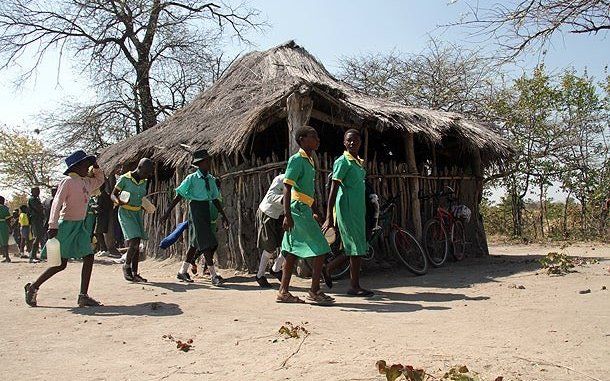
We were meant to raise a generation that would never walk barefoot to school, never study under trees, and never die from curable diseases because the nearest clinic had no paracetamol.
And yet, here we are—an entire nation collectively shamed.
When our presidents boast motorcades of 20 vehicles, when their security detail includes drones while our hospitals can’t afford oxygen tanks, what are we telling the world about black leadership?
When billion-dollar contracts are awarded without tender and entire gold-smuggling operations are televised without consequence, what image are we painting?
The shame I feel is not just national—it is racial. Because this betrayal isn’t just of Zimbabweans.
It’s a betrayal of the entire black race.
We were supposed to show the world that we could.
That we deserved to govern ourselves.
That we could succeed where the colonizer insisted we would fail.
But right now, we are proving them right. And nothing could be more devastating.
 TENDAI RUBEN MBOFANA - THE UN-OPPRESSED MIND!
Thanks for your thoughts, Tendai. It is a tragedy of immense proportions that, despite the promises and expectations of 1980, Zimbabwean citizens are still waiting for the benefits they were led to believe would follow. In the meantime, the economy has been wrecked, the fledgling democracy twisted into a power-crazed dictatorship, and the spirit of the Ndebele nation — along with large sections of the Shona people and their sub-groups — crushed. And the winners? A small clique of politically connected thieves, thugs, villains, and other self-serving reprobates.
LikeLiked by 1 person
Thanks for the comment Michael. We have been let down in a big way. The promised fruits are no where to be seen.
LikeLike
I couldn’t agree more. As a former white Zimbabwean, I’ve seen firsthand the devastating effects of corruption and poor leadership on a nation. Africa has immense potential, but until its leaders are held accountable by the people, progress will be slow.
In Zimbabwe, we saw how a once-thriving economy was destroyed by cronyism, nepotism, and a lack of transparency. The people suffered, and many were forced to flee. It’s a pattern repeated across the continent.
Real change requires more than just new faces in government; it demands a fundamental shift in the relationship between leaders and citizens. The people must demand accountability, transparency, and good governance.
Only then can Africa unlock its true potential and provide a better future for its citizens. Until then, the cycle of poverty, corruption, and stagnation will continue.
LikeLiked by 1 person