Today is arguably one of the most painful days for ordinary Zimbabweans.
Today, 18 April 2025, Zimbabwe commemorates 45 years of independence.
Once again, the ruling ZANU PF regime, under President Emmerson Mnangagwa, will stage elaborate and extravagant celebrations—this year in the rural town of Nembudziya in Gokwe.
These festivities will cost the already struggling national fiscus millions of dollars, and as expected, will feature pomp and fanfare, military displays, musical performances, and the President’s much-anticipated speech.
His message is unlikely to stray from the usual script, a repetitive chant on how we must “jealously guard the fruits of our hard-won independence, particularly from the country’s detractors who seek to reverse these gains.”
To directly receive articles from Tendai Ruben Mbofana, please join his WhatsApp Channel on: https://whatsapp.com/channel/0029VaqprWCIyPtRnKpkHe08
However, as these words echo across the crowd, a painful question lingers in the minds of millions of impoverished Zimbabweans: where exactly are these so-called “fruits of independence”?
Who is truly enjoying them?
Because certainly, over 90% of the population—reeling under joblessness, poverty, crumbling infrastructure, and hopelessness—can hardly claim to be among the beneficiaries.
For most Zimbabweans, the so-called “fruits” of independence are not something they guard jealously.
Rather, they watch helplessly as they are plundered by a powerful ruling elite.
These are the individuals who live lives of unimaginable luxury, while the majority struggle to put a single meal on the table.
The people are not failing to guard these “fruits” because they do not love their country, but because the system itself is designed to shut them out and place all national resources in the hands of the politically-connected few.
Zimbabwe’s vast mineral wealth, its agricultural lands, and the taxes collected from its citizens are being siphoned by those in power—through shady procurement deals, illicit financial flows, and unchecked corruption.
President Mnangagwa only needs to walk a short distance from the venue of today’s celebrations in Nembudziya to see the real Zimbabwe—the one hidden behind the curtain of state propaganda.
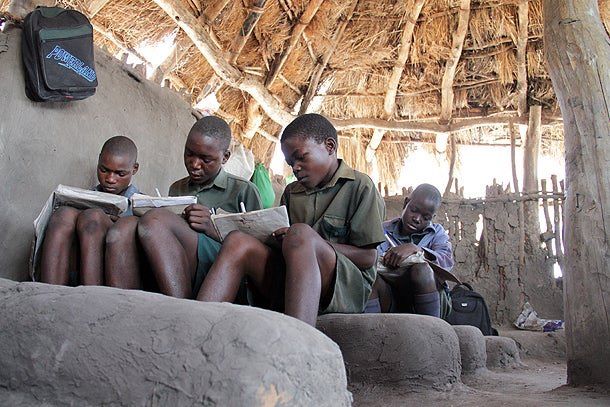
He will not need to look far to find dilapidated schools where children learn under pole and dagga structures, sitting on rocks, and without a single textbook or writing material.
The few facilities that have been hurriedly renovated or constructed for today’s event are a smokescreen meant to give the illusion of progress.
But the truth lies in the many forgotten rural outposts, clinics without medicines, schools without teachers, and communities without clean water.
Ironically, Nembudziya is a place that was, for years, represented by Justice Mayor Wadyajena, a close ally of President Mnangagwa.
During his tenure, he became infamous for his extravagant lifestyle, including the purchase of a $420,000 Lamborghini—an obscene display of wealth amid the gut-wrenching poverty of his own constituency.
How can anyone, in good conscience, speak of “guarding the fruits of independence” in such a context?
Who is really enjoying these fruits, and at what cost to everyone else?
Zimbabweans are constantly told to be patriotic—to defend the gains of liberation—but what does that mean in real terms?
When they peacefully demonstrate against injustice, they are beaten, arrested, or silenced.
When they vote for the opposition, they are labeled sellouts, face intimidation, and find the electoral process rigged against them.
When they try to expose corruption, they are threatened or themselves arrested on spurious charges.
Yet, paradoxically, it is in these actions that ordinary citizens attempt to truly defend the legacy of the liberation struggle—a struggle meant to bring freedom, dignity, and opportunity to all.
Consider the recent scandal involving controversial businessman Wicknell Chivayo, a man whose name has become synonymous with state-sanctioned looting.
How can a country with crumbling infrastructure and failing hospitals justify the transfer of R1.1 billion from its Treasury to a South African company, Ren-Form CC, under dubious procurement procedures—only for R800 million of that to land almost immediately in Chivayo’s business accounts?
What role did he even play to justify such a windfall?
For the children of Nembudziya sitting on rocks and studying under trees, what message does this send?
That the fruits of independence are for those who are close to power, while the rest of the nation eats crumbs?
The tragedy of Zimbabwe’s post-independence story is not just about stolen wealth.
It’s about stolen dreams.
The promise of 1980 was that all Zimbabweans, regardless of tribe, class, or political persuasion, would finally enjoy dignity, equality, and opportunity.
But 45 years later, those promises remain unfulfilled.
And the situation is particularly painful in mineral-rich regions like Marange, Bikita, and Mutoko, where billions of dollars’ worth of natural resources are extracted while locals remain trapped in poverty, their lives marked by underdevelopment and neglect.
What would the likes of Herbert Chitepo, Leopold Takawira, or Rekayi Tangwena say if they were to return today and see the country for which they gave their lives?
Would they look upon the current leadership with pride, or with sorrow?
Would they recognize the Zimbabwe of today as the one they dreamed of when they risked everything for independence?
Surely not.
If anything, these heroes are turning in their graves, betrayed by those who took power in their name but abandoned their values.
Yes, today the people of Gokwe will attend the Independence Day celebrations.
They will come in their numbers.
But it would be a grave mistake to interpret this attendance as endorsement of the regime or its policies.
They are coming because, for once, there will be free food, music, and a temporary escape from their daily suffering.
The entertainment will be a balm, however brief, to the wounds of poverty and exclusion.
Zimbabweans deserve more than just pageantry and rhetoric.
They deserve genuine independence—economic, political, and social.
They deserve a country where public funds build schools, equip hospitals, and improve livelihoods—not line the pockets of politically connected elites.
Independence should mean freedom from fear, freedom from want, and freedom to live with dignity.
The liberation war was not fought to replace white minority rule with black minority rule.
Thousands of men, women, and children did not lose their lives so that only one family or those linked to them may enrich themselves at the expense of millions of Zimbabweans.
It was waged for every citizen to enjoy the wealth and promise of Zimbabwe.
Until that happens, Zimbabweans will continue to ask: who is really enjoying the fruits of our independence?
 TENDAI RUBEN MBOFANA - THE UN-OPPRESSED MIND!