It always troubles my mind.
Sometimes I wonder: what crime did we commit to deserve being born in this god-forsaken country called Zimbabwe?
It honestly doesn’t matter where one lives—urban or rural—life for the ordinary Zimbabwean has become a drawn-out nightmare, a daily battle for survival in a country that has been hijacked by a parasitic elite.
Our lives are filled with unending anguish, frustration, and indignity.
And we, the ordinary citizens, have been reduced to nothing more than collateral damage in a system that was never built for us.
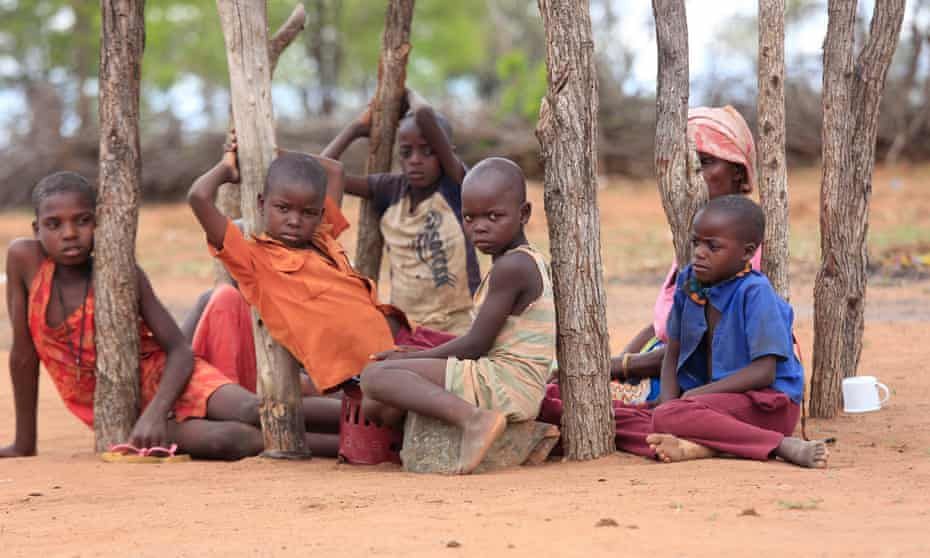
In the rural areas, 45 years after independence, life still mirrors the darkest days of colonial neglect.
To directly receive articles from Tendai Ruben Mbofana, please join his WhatsApp Channel on: https://whatsapp.com/channel/0029VaqprWCIyPtRnKpkHe08
Millions still draw water from shallow, open wells or rivers, braving waterborne diseases and crocodiles in some parts.
A staggering 67% of rural households still rely on unsafe water sources, according to UNICEF.
Defecating in the bush is still the norm for many, as pit latrines remain a luxury and flush toilets a distant urban myth.
Electricity?
That’s a word whispered with awe by those who have visited the cities, yet even in urban areas it is now more of a rumour than a reality.
For the rural poor, the promise of electrification has always been a lie.
And when the government launched its much-vaunted land reform programme, it benefitted less than 7% of rural dwellers.
The best, most productive land fell into the hands of the powerful—those who spend their time posting photos of their harvests on social media while the rest of the country begs for food aid after every poor rainy season.
Has a single one of those who seized vast farms through political connections ever stood in line for humanitarian food assistance?
Have they ever lost a crop and gone hungry as a result?
No.
They sit comfortably in their mansions while the rest of us suffer in silence, forgotten by a government that only remembers us when it needs votes or applause.
I will not even delve deeply into the state of rural clinics and schools.
Some are 10 to 15 kilometres away, most without doctors or nurses, textbooks or chairs.
Children learn under trees.
Women give birth by candlelight, often with no trained professionals nearby.
These are not the hallmarks of a nation celebrating 45 years of independence—they are signs of a country that has failed its people at the most basic level.
Yet for those of us in urban areas, the pain is not any less.
In fact, some might say it’s worse.
The only reason I even came up with such an emotional and candid title for this piece is because, last night, we endured yet another full night without electricity—all because of a brief gust of wind that knocked down a power line.
Despite the valiant efforts of ZESA technicians, they were unable to restore power due to the dilapidated, colonial-era infrastructure they’re forced to work with.
It’s embarrassing, and frankly tragic, that in 2025 Zimbabwe still relies on power generation and distribution systems built before our independence.
These systems have never been adequately upgraded or maintained.
Today’s modern electrical infrastructure in other parts of the world can withstand lightning strikes and high winds through automated grid isolation, reinforced smart lines, and self-healing systems that reroute power in real-time.
In Zimbabwe, we lose electricity after a slight drizzle, and some areas stay in the dark for days.
Currently, Zimbabwe faces a power deficit of around 866 megawatts.
Hwange Thermal Power Station, our largest, frequently breaks down, while Kariba Dam’s generation is crippled by low water levels.
Yet instead of investing in alternative energy—solar, wind, geothermal—the government continues to waste billions on vanity projects and luxury lifestyles.
We suffer for it every day.
This lack of power isn’t just an inconvenience—it’s economic sabotage.
With over 80% unemployment and more than 90% of the population living in poverty, every hour without electricity is money lost.
Businesses are forced to close or run costly generators.
In our homes, we have to dig deep into already empty pockets to buy gas or firewood just to cook a meal.
The money we scrape together is spent not on bettering our lives, but on compensating for our government’s failures.
What hurts the most is being forced to spend fortunes on solar systems and boreholes—things our parents believed were already taken care of when they moved to the cities in the 1960s and 70s.
They left the rural areas for modern homes with running water and electricity.
Now, decades later, their children must revert to the very things they had escaped.
We now bear the burden of financing government failure.
In most urban suburbs, water has not come out of taps for years.
Instead, we crowd around communal boreholes, begging for water.
Those with private boreholes become lifelines, and those without are left at the mercy of disease, distance, and indignity.
Just imagine the despair of a mother forced to carry buckets of water for kilometres each day, or a sick child who must bathe in a single cup of water.
What makes our suffering even more agonizing is the unbearable cost we are forced to bear in trying to fill the gaping void left by government incompetence.
In urban areas, installing a basic solar system that can power just a few lights and appliances can set one back at least US$500 to US$1,500 — an amount most Zimbabweans can only dream of earning in an entire year.
A decent borehole, including drilling, casing, and pumping equipment, costs between US$1,200 and US$3,000 depending on depth and location.
This is money that should have been used to send children to school, invest in small businesses, build homes, or simply enjoy the dignity of a decent life.
Instead, we are reduced to involuntary financiers of government negligence, paying out of pocket for services that should be our basic right in a functioning society.
The poor, who cannot afford these alternatives, are condemned to lives of endless misery — proof that in Zimbabwe, survival itself has become a luxury.
That is Zimbabwe today.
We have reached a point where merely surviving has become a full-time job.
That in itself is a damning indictment of our rulers.
Hospitals without medicines.
Roads that look like minefields.
Inflation that eats away at every dollar.
Prices that rise faster than salaries.
And still, those in power grow richer, fatter, more arrogant.
Zimbabwe is a mineral-rich nation.
We have gold, platinum, lithium, diamonds—yet, we live like a country emerging from decades of civil war.
But we have had peace—at least the absence of war.
What we haven’t had is justice, transparency, or accountability.
We haven’t had a government that cares.
The people who run this country treat it as their private business.
They exploit its resources, pocket its wealth, and treat us as an inconvenience.
While they fly to Dubai for medical treatment, our mothers die on clinic benches.
While they send their children to schools in Europe, ours sit on the floor, learning nothing.
I am haunted by the sight of grown men and women—strong, dignified, hard-working—being reduced to beggars.
Begging for food.
Begging for jobs.
Begging for electricity.
Begging for water.
Begging to survive.
I have seen respected elders demean themselves, singing and dancing for a bag of mealie meal or second-hand clothes.
What happened to our pride? Our humanity?
And so I ask, from the depths of my heart: what did we do to deserve this?
What sin did we commit to be born in this cursed land?
How long will we suffer?
We have had enough.
It is time to rise.
To speak out.
To fight back—not with weapons, but with our voices, our votes, our unity.
We must reject the lies.
We must no longer be afraid.
Fear is a luxury we can’t afford anymore.
We deserve better.
We deserve to live, not just to survive.
And we must never stop demanding the Zimbabwe we were promised, the Zimbabwe we were born to build.
 TENDAI RUBEN MBOFANA - THE UN-OPPRESSED MIND!