It’s time for the world to grow up!
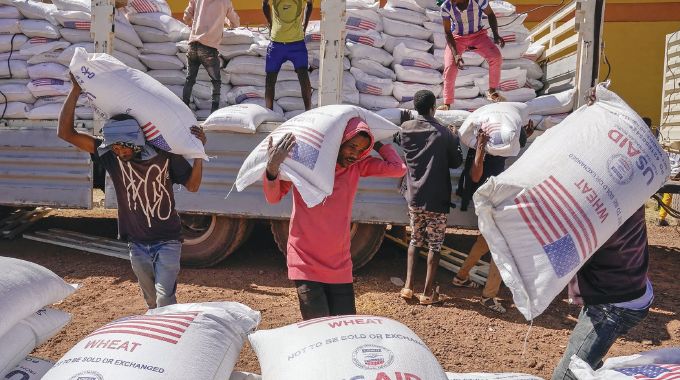
The recent decision by US President Donald Trump to cut off most aid to foreign countries, just months into his second term, has sent shockwaves across the globe.
From global health programs to education, food security, and humanitarian support, governments and organizations that had built entire national systems on American generosity are now scrambling to figure out how to fill the void.
While many have reacted with alarm, panic, and outrage, the truth is — this is a long-overdue wake-up call.
The world, particularly in the Global South and especially Africa, has become far too dependent on the benevolence of US taxpayers.
This has created a disturbing dependency syndrome that has not only stifled self-reliance but has actively encouraged corruption, looting, and elite impunity.
It is genuinely perplexing how countries endowed with extraordinary natural wealth have allowed themselves to fall into this trap.
In fact, this aid addiction has done more harm than good — not because the aid itself is inherently bad, but because it has shielded the ruling elites from accountability.
To directly receive articles from Tendai Ruben Mbofana, please join his WhatsApp Channel on: https://whatsapp.com/channel/0029VaqprWCIyPtRnKpkHe08
Citizens have been disconnected from the real cost of corruption and misgovernance because foreign donors have stepped in to pay for healthcare, education, food assistance, and even infrastructure development.
This has created an illusion of functional governance, even in countries where national wealth is being pillaged on a grand scale.
Take Zimbabwe, for example.
A country sitting on billions worth of mineral resources — gold, platinum, lithium, diamonds — and vast agricultural potential, yet it has allowed itself to become a welfare case of the US.
For over two decades, Zimbabwe’s public health system has been largely sustained by foreign aid, most of it from the United States.
Antiretroviral drugs (ARVs) for over one million HIV-positive citizens have been provided through US-funded programs like PEPFAR.
When drought strikes, the World Food Programme and USAID step in to feed millions.
Meanwhile, the political elite enrich themselves through illicit gold deals, smuggling syndicates, and opaque mining contracts — most of which are never audited or accounted for.
Public hospitals collapse, schools crumble, and civil servants earn measly salaries, but citizens don’t feel the full weight of these failures because the United States cushions the blow.
As a result, there is no urgency for governments to utilize their own resources for national development.
There is no incentive to invest in robust public institutions, because someone else — the ever-generous American taxpayer — will pick up the slack.
And that has been the story across much of Africa and the Global South.
Vast oil reserves in Nigeria, diamonds in Sierra Leone, cobalt in the DRC, gas in Mozambique, and lithium in Zimbabwe — yet these nations remain some of the most aid-dependent in the world.
What explains this contradiction?
It’s not a lack of resources.
It’s a lack of political will, accountability, and honest leadership.
Even more ironically, many of these governments often scream about sovereignty and “foreign interference” whenever Western countries raise concerns about governance, human rights, or elections.
Zimbabwe’s ruling elite, in particular, have repeatedly accused the opposition of being “puppets of the West.”
Yet, the same government has been a willing puppet of the United States — happily accepting billions in aid while failing to provide for its own people.
If relying on US funding to feed your population and provide ARVs is not being a puppet, then what is?
Let’s be honest: foreign aid has served American strategic interests for decades.
It has been a tool of “soft power,” aimed at winning hearts and minds, especially during the Cold War.
It ensured that developing countries stayed in the US orbit, while their citizens associated American goodwill with survival.
So yes, the aid was not always selfless — it was also a vehicle to preserve US global hegemony.
But for all their noise about imperialism and sovereignty, many governments were quite happy to play along, as long as the money kept flowing.
Now that the tap has run dry, the true state of these nations will be exposed.
People will finally begin to feel the consequences of looted national budgets, underfunded health systems, and broken public institutions.
This may be painful, but it is necessary.
Only when the safety net of US aid disappears will citizens wake up and begin to demand answers.
Where is the diamond money?
Where are the mining royalties?
Why are national resources being given away to politically connected elites and foreign cartels while hospitals run out of bandages?
Donald Trump’s decision may have been abrupt and controversial, but it presents a unique opportunity.
It is time for the world, and especially Africa, to grow up.
We must stop acting like infants suckling on Washington’s breast and start behaving like responsible adults capable of managing our own affairs.
There is nothing dignified about begging for handouts while sitting on a treasure chest.
It is shameful that in 2025, Zimbabwe still needs US taxpayers to take care of its sick, feed its hungry, and fund its schools — while government officials buy luxury cars, build mansions, and stash money in offshore accounts.
This is the moment to break the umbilical cord.
It is time to rebuild our governance systems, restore accountability, and ensure that national wealth benefits national citizens.
We must prioritize investment in public services, clean up public finance management, and stop the bleeding of illicit financial flows.
The era of blaming colonialism or sanctions for every failure must end.
We cannot keep crying about being victims while doing nothing to help ourselves.
Let the United States take care of its own people.
Let American taxpayers not be burdened with the failures of foreign governments that have repeatedly failed to put their citizens first.
If we truly want respect on the global stage, then we must earn it — not through slogans and speeches, but by delivering results.
Let us be clear: the end of US aid is not the end of the world.
It is the beginning of a new one — one where self-determination, dignity, and true sovereignty are not just buzzwords, but a lived reality.
Trump has, perhaps unintentionally, offered us a gift.
A chance to finally stand on our own two feet, to shake off the chains of dependency, and to build nations that serve their people, not their elites.
The question is: will we seize this moment — or will we continue to cry like helpless babies whose feeding bottle has been taken away?
 TENDAI RUBEN MBOFANA - THE UN-OPPRESSED MIND!