Zimbabwe’s ruling ZANU-PF party appears to be basking in jubilant self-delusion.
This unbridled elation stems from a recent proposal in the United States Congress, introduced by Representative Andy Ogles of Tennessee, to amend the U.S. Constitution and allow former President Donald Trump to serve a third term in office.
Ogles’ joint resolution aims to revise the 22nd Amendment, which imposes a two-term limit on the presidency, suggesting that no person be elected more than three times or to any additional term after two consecutive terms.
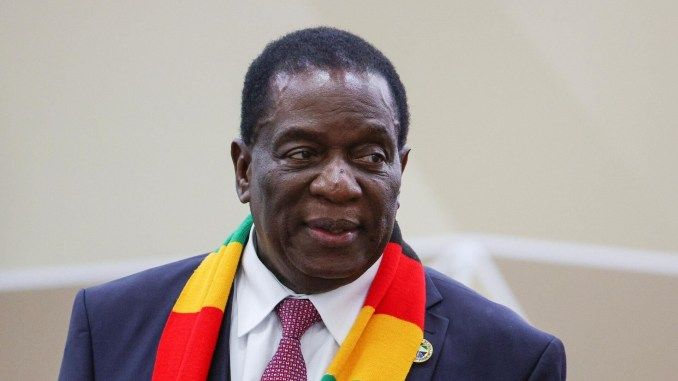
This development has seemingly reinvigorated ZANU-PF’s beleaguered faction of supporters who are desperately pushing to extend President Emmerson Mnangagwa’s tenure beyond his 2028 constitutional limit.
These proponents have faced increasing resistance, not only from the Zimbabwean public but also from significant segments within their own party.
To directly receive articles from Tendai Ruben Mbofana, please join his WhatsApp Channel on: https://whatsapp.com/channel/0029VaqprWCIyPtRnKpkHe08
The factional battlelines within ZANU-PF have become more apparent, with one faction backing Mnangagwa and another reportedly rallying behind Vice President Constantino Chiwenga, a former military commander who led the 2017 coup that ousted Robert Mugabe.
Mnangagwa’s supporters have clung to the Ogles proposal as if it were some form of global validation for their schemes.
They conveniently ignore the fact that Ogles’ resolution faces almost insurmountable hurdles, even in the U.S., where democratic institutions remain far stronger and more independent than those in Zimbabwe.
Furthermore, the notion that Zimbabwe should blindly emulate an American political stunt underscores the hypocrisy and intellectual dishonesty that define ZANU-PF’s propaganda machinery.
To begin with, ZANU-PF’s sudden veneration of American political developments is selective and insincere.
The ruling party has spent years demonizing the United States, particularly when facing criticism over its abysmal human rights record, electoral malpractices, and economic mismanagement.
When the U.S. criticizes Zimbabwe’s elections as neither free nor fair, ZANU-PF retorts with claims that Washington has no moral authority to lecture others on democracy.
Yet, here they are, clutching at a proposed constitutional amendment in the U.S. as if it were the ultimate endorsement of their own undemocratic ambitions.
Why does ZANU-PF cherry-pick aspects of American governance to celebrate while conveniently ignoring others?
Are they prepared to embrace other elements of U.S. democracy, such as allowing opposition parties to operate freely or respecting citizens’ constitutional rights to protest?
Clearly not.
The hypocrisy is glaring, as is the opportunism of using Ogles’ resolution to justify undermining Zimbabwe’s constitutional safeguards.
Moreover, Ogles’ proposal is far from a reflection of mainstream American political sentiment.
Amending the U.S. Constitution requires a supermajority in both the House of Representatives and the Senate, as well as ratification by three-fourths of the state legislatures.
With the Republican Party holding only a narrow majority in the House and no such advantage in the Senate, this is little more than political theater.
Even Donald Trump himself has previously dismissed the idea of seeking a third term, stating in 2024 that he had no interest in pursuing a constitutional amendment for this purpose.
This raises the question: why is ZANU-PF celebrating a proposal that is not only improbable but also widely seen as a political stunt?
The answer lies in their desperation to legitimize their own plans to extend Mnangagwa’s term in office.
Under Zimbabwe’s current Constitution, the president is limited to two five-year terms, as stipulated in sections 91 and 95.
Amending these provisions would require not only a two-thirds supermajority in both Houses of Parliament but also two national referendums—one to remove the term limit and another to permit Mnangagwa to benefit from the amendment.
Adding to the complexity, section 328(7) explicitly states that any constitutional amendment to extend term limits does not apply to anyone who has previously held the presidency.
This means Mnangagwa’s supporters would need to clear a host of legal and political hurdles to achieve their goal.
The unlikelihood of success has not deterred Mnangagwa’s faction, which has resorted to underhanded tactics, such as colluding with dubious opposition figures like Sengezo Tshabangu.
Tshabangu, who controversially declared himself leader of the opposition, has been complicit in recalling duly elected opposition MPs and replacing them with handpicked loyalists.
Such moves are designed to tilt parliamentary dynamics in favor of Mnangagwa’s agenda, yet they remain a blatant affront to democratic principles.
The hypocrisy of ZANU-PF’s position becomes even more apparent when considering its complete disregard for the will of the people.
Zimbabweans have not expressed any support for extending Mnangagwa’s term.
No MP campaigned on this platform during the last election, and Mnangagwa himself has publicly denied any interest in remaining in office beyond his constitutional limit.
Yet, behind the scenes, the groundwork is being laid for an undemocratic power grab.
ZANU-PF’s claims that MPs pushing for constitutional amendments are acting in the interests of the people are patently false.
When have these legislators ever consulted their constituents on this issue?
How can they claim a mandate for something that was never part of their campaign platforms?
This disconnect underscores the authoritarian nature of Zimbabwe’s political system, where the ruling elite imposes its will on the populace without genuine consultation or consent.
The contrast between Zimbabwe and the U.S. could not be starker.
While Ogles’ proposal may reflect the divisive and controversial nature of American politics, it is ultimately subject to rigorous institutional scrutiny and public debate.
If the American people oppose the idea of a third term for Trump, it will not happen.
In Zimbabwe, however, ZANU-PF has consistently shown its willingness to subvert public opinion and manipulate state institutions to achieve its objectives.
For instance, the government has systematically stifled dissent, suppressing anti-government protests and cracking down on opposition activities.
In stark contrast, the U.S. permits citizens to exercise their constitutional rights, even in the face of controversial proposals like Ogles’.
Just last week, Americans were free to stage anti-Trump protests without fear of violent repression—a fundamental right that Zimbabweans can only dream of under Mnangagwa’s rule.
The people of Zimbabwe must reject ZANU-PF’s hypocritical justification for extending Mnangagwa’s term in office.
This is not about emulating the U.S. or any other country; it is about preserving Zimbabwe’s constitutional integrity and resisting the erosion of democratic norms.
Mnangagwa’s continued tenure represents not only a betrayal of the Constitution but also a perpetuation of the suffering and impoverishment that his administration has inflicted on the nation.
ZANU-PF’s celebration of Ogles’ proposal is nothing more than a smokescreen for their undemocratic ambitions.
It is up to the people of Zimbabwe to remain vigilant and steadfast in their opposition, ensuring that their voices are heard and their rights are protected.
The future of Zimbabwe’s democracy depends on it.
 TENDAI RUBEN MBOFANA - THE UN-OPPRESSED MIND!