When I learned of the death of Zimbabwe’s former vice president Phelekezela Mphoko yesterday, I was overwhelmed by a particular feeling—a mix of sadness and disappointment.
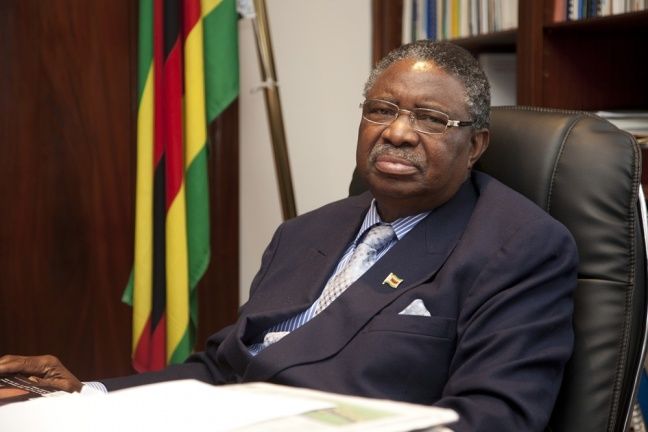
Here was a man who had the rare opportunity to be on the right side of history, to tell his story and expose the truths behind Zimbabwe’s liberation struggle, yet he chose to squander it.
His life, especially his later years, exemplifies the tragedy of misplaced priorities in Zimbabwean politics, where self-preservation and political expediency take precedence over ideals and principles.
Mphoko’s political career reached its zenith in 2014 when he was appointed vice president by Robert Mugabe.
His tenure, however, was cut short in November 2017, during the military coup d’état that ousted Mugabe.
Mphoko, along with those perceived to belong to the G40 faction aligned with Grace Mugabe, was expelled from ZANU-PF.
His position was subsequently filled by Kembo Mohadi.
This period marked the beginning of his fall from grace, yet it also presented him with a unique opportunity to reflect on his legacy and take a stand for truth and justice.
Tragically, he failed to do so.
Shortly after his removal from office, Mphoko reached out to me with a proposition to write his memoirs.
Mphoko was one of several former ZPRA commanders, including the late intelligence supremo Dumiso Dabengwa, with whom I had the privilege of forming a relationship.
He wanted to document his experiences during the liberation struggle and his role in the Zimbabwe People’s Revolutionary Army (ZPRA).
This was in 2021, and for a brief period, we maintained regular communication.
To directly receive articles from Tendai Ruben Mbofana, please join his WhatsApp Channel on: https://whatsapp.com/channel/0029VaqprWCIyPtRnKpkHe08
He shared significant insights into the history of Zimbabwe’s liberation, recounting the formation of ZPRA under the leadership of Jason Moyo as Commander and Rogers Mangena as Chief of Staff, while Mphoko himself served as Chief of Logistics and Supplies.
This formation followed the internal crisis within ZAPU involving James Chikerema and the creation of the Front for the Liberation of Zimbabwe (FROLIZ).
Mphoko’s stories painted a picture of ZPRA as a highly professional and respected military force.
He spoke of operations such as Xhoxhoza, which led to the closure of the Rhodesian-Zambian border, and strategic missions like Operation Spearhead, Operation Assegai, and Operation Old Woman.
The latter, a top-secret operation commanded by Abel Mazinyane, involved deploying a special unit in the Mount Darwin area.
Under Mangena’s leadership, ZPRA earned the admiration of even Rhodesia’s top military leader, Peter Walls.
These anecdotes revealed the discipline, courage, and strategic brilliance that characterized ZPRA, yet they also exposed the dark undercurrents of betrayal and conspiracies that plagued the liberation movement.
One of the most striking accounts Mphoko shared was about the death of Rogers Mangena in 1978.
According to Mphoko, Mangena died in Zodwa Dabengwa’s flat in Lusaka after returning from the Soviet Union, where he had been receiving treatment following an attempt on his life.
Those who orchestrated the attack were never arrested, and Mphoko suspected they were individuals within ZPRA who wanted Mangena sidelined.
He revealed how conspiratorial factions undermined Mangena’s legacy by excluding those who worked closely with him from his burial and rejecting the honor proposed by Zambian President Kenneth Kaunda to bury him on that country’s Youth Heroes Day, as some within the ZPRA ranks felt he (Mangena) did not deserve such an honor.
Following Mangena’s death, Mphoko was nominated by Dr. Joshua Nkomo to succeed him, but internal divisions prevented his appointment with some viewing this (Mphoko’s appointment) as “Ukuvusa-U-Mangena”.
Mangena’s death, Mphoko argued, marked the decline of ZPRA as a crack military force, replaced by what he described as an “imposter civilian ZIPRA” that lacked proper military expertise.
This decline, coupled with the conspiratorial dimensions within ZAPU and ZPRA, undermined the liberation struggle and laid the groundwork for future challenges.
Mphoko also recounted a pivotal meeting involving Mozambique’s President Samora Machel and the Zimbabwe People’s Army (ZIPA) just before the Geneva Conference in 1976.
ZIPA was an attempt, pushed by African leaders as Machel, to unite the two main revolutionary armies, ZPRA and the Zimbabwe National Liberation Army (ZANLA), just before the Conference.
At this meeting, Machel suggested that ZIPA commanders take the lead in representing the liberation forces at the conference.
Mangena, however, rejected the idea, insisting that ZPRA was subordinate to ZAPU under Joshua Nkomo.
When ZPRA declined the leadership role, Machel turned to ZANLA’s Webster Gwawuya, who proposed Robert Mugabe as their representative.
At the time, Mugabe, along with Edgar Tekere, had been placed under house arrest by Machel in Quelimane, Mozambique, following their highly suspicious crossing into Mozambique to assume control of ZANLA forces.
Gwawuya’s proposal led to Mugabe and Tekere’s release, paving the way for Mugabe’s eventual ruthless rise to power (where those who stood in his way were systematically eliminated by his hatchet men), and the subsequent betrayal of the ideals of the liberation struggle.
Mugabe’s group was to later take over Zimbabwe at independence in 1980 and subsequently run the country into the ground through the brutal repression of the population and rampant corruption.
These are the same people still in power today.
These revelations were just a fraction of the rich history Mphoko shared with me.
Yet, inexplicably, his communication with me ceased abruptly.
I was left wondering why he would abandon such an important endeavor.
The answer came in June 2023 when I saw him on television attending a ZANU-PF campaign rally in Nkayi, presided over by Emmerson Mnangagwa—the same man who had orchestrated his dismissal from office.
It was clear that Mphoko had chosen political survival over truth.
The once-urgent narrative about the liberation struggle and his role in it was conveniently shelved, replaced by an effort to mend fences with the ruling elite.
This decision was deeply disappointing.
In fact, this morning, as I was writing this article, I did a quick Google search on Mphoko and even went through a Wikipedia page about him.
There was really not much information about the man, which signified to me that what he had told me, especially about his life, was still not out there.
Mphoko had the chance to provide a candid and unfiltered account of Zimbabwe’s liberation struggle, to expose the betrayals and conspiracies that undermined its objectives, and to contribute to a more accurate historical record.
Instead, he opted for self-preservation, aligning himself with the very forces he had once sought to criticize.
His actions reflect the broader malaise of Zimbabwean politics, where personal gain often supersedes public service.
Politicians invoke the rhetoric of serving the people only when it suits their interests, but in reality, the people are rarely a priority.
Mphoko’s life is a cautionary tale about the consequences of prioritizing self-interest over principles.
He had the opportunity to be a voice for truth and justice, to stand on the right side of history, but he squandered it.
His story is a microcosm of the failures of Zimbabwean leadership—a leadership that has consistently placed personal ambition above the needs of the nation.
There are many in power and those aligned to them who are fully aware of the real reasons Zimbabwe is in such economic and political shambles, but opt to keep quiet or even defend the ruling elite simply out of expediency.
They place greater significance on their presence on the gravy train and the subsequent personal benefits at the expense of a population that languishes in abject poverty due to rampant high-level corruption and gross mismanagement.
As we reflect on Mphoko’s legacy, we must also confront the broader systemic issues that have plagued Zimbabwe since independence.
Only then can we hope to build a better future for the generations to come.
 TENDAI RUBEN MBOFANA - THE UN-OPPRESSED MIND!