In recent years, a transformative shift has been sweeping across Southern Africa.
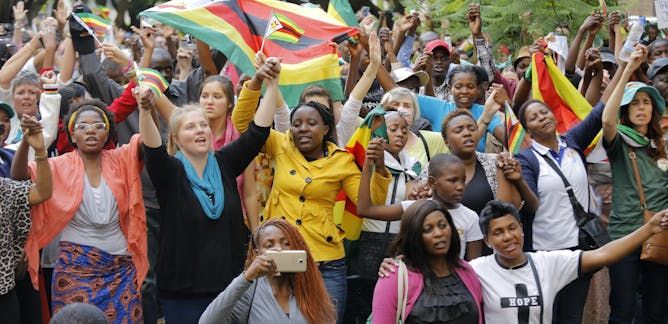
A wave of democratic movements and electoral successes by opposition parties has caused significant disruptions in long-standing political structures, particularly in countries where former liberation movements, once heralded as champions of independence, have held power for decades.
These developments have ignited a spark of hope among the oppressed and disillusioned populations of Zimbabwe, many of whom have been yearning for a change of leadership that has been denied to them for over four decades.
Recent electoral defeats of ruling parties in Botswana, Mauritius, and South Africa, as well as widespread protests in Mozambique, have prompted many Zimbabweans to dream of a similar transformation in their own country.
Yet, the lessons of history, as well as the complex realities of Zimbabwe’s political environment, suggest that such change will not come easily.
Just as the winds of change that swept across Africa in the 1960s did not automatically blow in every direction, Zimbabweans must actively demand and fight for their freedom if they are to see a peaceful and democratic transition of power.
The New Wave of Change in Southern Africa
Across Southern Africa, the political landscape is undergoing a seismic shift.
In Botswana, the ruling Botswana Democratic Party (BDP), which had governed since the country’s independence, was recently defeated by the Umbrella for Democratic Change (UDC) in a historic election.
This marked a significant break from the long-standing dominance of the BDP, signaling a growing desire for change among Botswana’s electorate.
In Mauritius, the Alliance of Change coalition secured a decisive victory over Prime Minister Pravind Jugnauth’s ruling coalition, ending his decade-long grip on power.
This victory is especially poignant given Mauritius’ history of multi-party democracy, where political alternance is a cherished value.
South Africa too has experienced a political shift, as the African National Congress (ANC), the party that led the struggle against apartheid, failed to secure a parliamentary majority for the first time in the country’s post-apartheid history.
To directly receive articles from Tendai Ruben Mbofana, please join his WhatsApp Channel on: https://whatsapp.com/channel/0029VaqprWCIyPtRnKpkHe08
In the 2024 elections, the ANC’s inability to maintain a majority forced it to enter into a Government of National Unity (GNU) with opposition parties, signaling a move toward greater political pluralism in the country.
Further north, in Mozambique, widespread protests have erupted after the opposition party, the Mozambique Democratic Movement (Pademos), led by Venâncio Mondlane, claimed victory in the 2024 elections, only for the ruling FRELIMO party to be declared the winner by the electoral commission.
This event has fueled discontent and calls for electoral reforms, as many believe the election results were manipulated to maintain FRELIMO’s hold on power.
In Zambia, the defeat of the Patriotic Front (PF) in 2021, under President Edgar Lungu, at the hands of opposition leader Hakainde Hichilema of the United Party for National Development (UPND), demonstrated that even entrenched political regimes can be toppled through the power of democratic processes, if the people are resolute in their pursuit of change.
Namibia, which has been ruled by SWAPO (South West Africa People’s Organization) since independence in 1990, is also bracing for a crucial election in November 2024.
With growing speculation that the opposition could finally unseat SWAPO, many Zimbabweans are once again holding their breath, hoping for a similar seismic shift in their own country.
The recent successes of opposition parties in these countries have undoubtedly reignited hope among Zimbabweans who have long lived under the authoritarian rule of the Zimbabwe African National Union-Patriotic Front (ZANU-PF).
However, this hope must be tempered by the realization that, despite these victories across the region, Zimbabwe’s political reality is far more complex and challenging.
The Zimbabwean Struggle: A Different Kind of Battle
Unlike Botswana, Mauritius, and South Africa, where political transitions have generally respected democratic norms, Zimbabwe remains under the iron grip of a regime that has shown no willingness to relinquish power voluntarily.
Since the country’s independence in 1980, ZANU-PF has controlled every aspect of Zimbabwean governance, with only brief interruptions during the 2009-2013 Government of National Unity (GNU) under the Global Political Agreement (GPA) following the 2008 electoral crisis.
Over the years, Zimbabweans have witnessed a series of elections marred by electoral fraud, voter intimidation, and systematic abuse of state institutions.
The MDC, led by the late Morgan Tsvangirai, and later by Nelson Chamisa, has offered a credible challenge to ZANU-PF, but despite the overwhelming support of the Zimbabwean populace for change, the party has struggled to break ZANU-PF’s stranglehold on power.
In both the 2018 and 2023 elections, ZANU-PF claimed victory amid accusations of widespread voter manipulation, violence, and interference by state apparatuses, including the security sector, the media, and the electoral commission.
Zimbabweans have been subjected to a long-running cycle of oppression, economic collapse, and political stagnation.
The country’s once thriving economy has been devastated by corruption, mismanagement, and the plundering of national resources by those in power.
The land reform program, intended to redress historical injustices, instead became a tool for political patronage and economic destruction.
Inflation rates have skyrocketed, unemployment is rampant, and public services are in disrepair.
Despite this, ZANU-PF has managed to cling to power, largely due to its control over the country’s military, police, and judicial systems.
International election observer missions, including those from SADC, have repeatedly criticized Zimbabwe’s electoral processes.
The 2023 election, in particular, was widely condemned as failing to meet SADC’s democratic standards.
The Southern African Development Community (SADC) noted that the election fell short of its principles on democratic elections, yet the international community continues to turn a blind eye to the ongoing violations of human rights and democratic principles in Zimbabwe.
As Zimbabweans look across the border at the recent successes of opposition parties in neighboring countries, there is a renewed sense of hope that perhaps the same change could come to Zimbabwe.
However, this optimism must be tempered with the understanding that change will not simply happen because other countries are experiencing democratic transitions.
Zimbabwe’s situation is unique, and the road to freedom and democracy will not be handed to the people on a silver platter.
The Role of the People in Creating Change
The events of the past few years in Southern Africa offer valuable lessons for Zimbabweans.
Just as the winds of change did not automatically sweep through Southern Africa in the 1960s, Zimbabwe’s path to democracy will not be a smooth one.
The struggle for a democratic and free Zimbabwe will require courage, sacrifice, and a resolute commitment from the people to stand up against oppression.
In his 1960 speech to the South African Parliament, British Prime Minister Harold Macmillan famously spoke of the “winds of change” blowing across Africa.
He argued that national consciousness was growing across the continent, and that no colonial or apartheid regime could resist this new tide of political awakening.
However, as history has shown, these winds of change did not simply sweep through every African country.
The people of Zimbabwe, like those in South Africa, had to fight for their freedom.
Zimbabwe’s uhuru only came 20 years afterward and only after a protracted liberation struggle with thousands of people losing their lives.
For Zimbabweans, this means understanding that freedom and democracy will not be handed to them by outsiders or by the goodwill of the regime.
Change will only come when the people of Zimbabwe, in their collective strength, decide that they have had enough of repression, economic hardship, and corruption.
They must stand up to the regime, demand their rights, and refuse to be intimidated or silenced.
The people of Zimbabwe have long suffered under a government that has exploited their labor, their resources, and their potential.
They have been subjected to widespread human rights violations, political repression, and economic ruin.
Yet, the fear of retribution from the state has kept many silent, and political apathy has become a widespread malady.
Zimbabweans must cast off this fear, and confront their oppressors head-on.
They must take to the streets, the voting booths, and every platform available to them to demand their democratic rights.
It is true that Zimbabwe’s political climate is far more repressive than that of many other countries in the region.
The government has consistently used violence, imprisonment, and intimidation to crush any form of dissent.
But this should not discourage the people of Zimbabwe.
History shows that oppressive regimes can and do fall when people are willing to stand up for their rights.
The path to change will not be easy, and it will require immense courage.
But Zimbabweans must draw inspiration from the growing political movements in the region and remember that they are not alone in their struggle.
The winds of change that are blowing through Southern Africa can also reach Zimbabwe, but only if the people are ready to meet those winds with a commitment to fight for their freedom, their democracy, and their future.
Conclusion: Change Will Not Come Without Sacrifice
As Zimbabweans watch their neighbors make strides toward democratic change, they must understand that the same transformation will not occur automatically in their country.
The winds of change are not a given; they must be fought for, earned, and demanded.
Zimbabwe’s struggle for freedom is not simply a matter of waiting for the political climate to shift.
It is a battle that requires the active participation of every Zimbabwean who believes in democracy and justice.
The country will not achieve a democratic transfer of power by passively hoping for it.
The people of Zimbabwe must stand up to the regime, demand their rights, and be willing to make the necessary sacrifices.
Only by rejecting fear and embracing collective action can the people of Zimbabwe bring about the change they so desperately need.
The winds of change may blow through Southern Africa, but for Zimbabwe, they will only arrive when the people rise up and demand their freedom.
The time for waiting is over.
It is time for Zimbabweans to act, to stand firm, and to fearlessly demand the change they deserve.
 TENDAI RUBEN MBOFANA - THE UN-OPPRESSED MIND!