Yesterday, I received a vitriolic message from an anonymous supporter of Zimbabwe’s ruling ZANU-PF party.
The message accused me of being a “mercenary” and an “enemy of the country,” simply because I continue to write articles that hold those in power accountable and expose the nefarious activities that are increasingly becoming the hallmark of this regime.
I found it a curious, albeit unsurprising, response.
In spite of me politely thanking him for the message and respectfully asking him to be more specific on the issues (in my writings) he found problematic, so that I could address them accordingly, he chose to go silent.
He merely ended his message with ‘forward with ZANU-PF and President Emmerson Mnangagwa’.
This, of course, is a pattern I’ve come to expect from the party’s defenders—an inability to engage with issues on an intellectual level, but rather, an inclination to launch baseless, personal attacks against those who dare to question their ‘dear leader’.
In a sense, this message encapsulates the very nature of politics in Zimbabwe today—blind loyalty to a political party of one’s choice, and by extension, to the leader of that party.
Tragically, this has become a common trend across the political divide.
This is not patriotism.
It is not about putting Zimbabwe first, or even about safeguarding the future of the country.
No, it is about one thing: protecting the interests of those who sit at the top of the political pyramid, even when their actions are driving the nation to the brink of collapse.
True patriotism requires a willingness to hold one’s leaders accountable, to question and challenge them when they go astray, and to prioritize the collective well-being of the nation above the egos and ambitions of individuals.
What I see in Zimbabwe today, particularly among ZANU-PF’s most ardent supporters, is something much more dangerous: a cult-like following, where the leader is elevated above the country, and loyalty to the party and leader is equated with loyalty to the nation itself.
The Dangers of Cultism in Politics
Patriotism, in its truest form, is about more than just rallying behind a leader—it is about standing up for the interests of the people and ensuring that those in power act in service of the nation, not just themselves.
This is not something that the ruling ZANU-PF party embodies.
To directly receive articles from Tendai Ruben Mbofana, please join his WhatsApp Channel on: https://whatsapp.com/channel/0029VaqprWCIyPtRnKpkHe08
Instead, the party’s behavior often borders on the hysterical.
A quick glance at the political landscape reveals a system where the leader’s personality and image dominate, and dissent is either silenced or labeled as unpatriotic.
In many respects, the politics of ZANU-PF no longer resemble a genuine liberation movement, as the party so frequently claims.
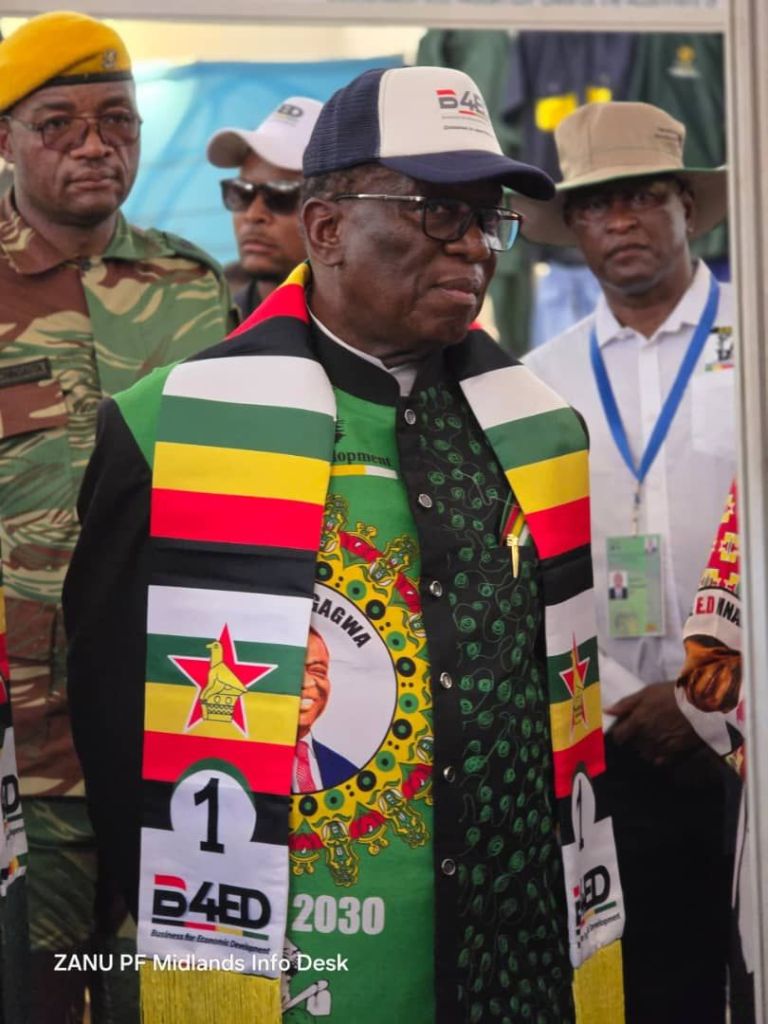
Instead, it looks more like a cult—a personality cult built around the leader.
The ZANU-PF elite do not appear to be guided by a vision of what is best for the country, nor are they committed to any particular ideology that advances the collective good.
Instead, they are bound together by blind loyalty to one individual—whether it be Robert Mugabe in the past, or Emmerson Mnangagwa now.
Even when top government officials speak, it is as if they are actually compelled to glorify Mnangagwa in everything.
At times I’m inclined to believe that these cabinet ministers and others high-ranking officials risk losing their jobs if they deliver a speech or address the media without attributing everything good to the president.
On the state-controlled broadcaster—the Zimbabwe Broadcasting Corporation (ZBC)—jingles praising Mnangagwa’s supposed outstanding attributes are played with maddening repetition.
Mnangagwa has become bigger than Zimbabwe!
Loyalty to him has become more important than loyalty to the country.
That is very dangerous!
A Pitfalls of Cultism
One only has to look at the way the leadership of ZANU-PF treats its own history to understand the extent of this.
After the military coup that ousted Mugabe in November 2017, the very same leaders who had served under Mugabe for decades, have now obliterated him out of the national psyche.
His contributions to the liberation struggle and his central role in the history of the nation have all but been erased from the official narrative.
In fact, Mnangagwa’s government went so far as to rename Robert Mugabe Way in Kwekwe—the fifth largest city in Zimbabwe—into ED Mnangagwa Way, as though Mugabe’s decades of leadership never mattered at all.
It was as if Mnangagwa wanted to spite the man who had mentored him for five decades and even kept him politically relevant even when he (Mnangagwa) was clearly not leadership material.
What does this tell us about the nature of ZANU-PF’s allegiance?
It tells us that this party is not driven by respect for history or loyalty to any particular set of ideals.
Rather, ZANU-PF’s loyalty is to the individual at the top of the hierarchy at that particular moment.
Once that individual is out of power, they are discarded, even vilified.
This is the hallmark of a personality cult, not a liberation movement.
In countries like South Africa, Namibia, and even far off US, their founding fathers are revered.
Go anywhere in South Africa and the legacy of Nelson Mandela is seemingly everywhere.
George Washington is still held in high esteem in the US some 225 years after his death.
I am not suggesting, by any stretch of the imagination, that Mugabe should be honored.
No, not at all.
This is the man who authored so much pain and suffering upon the people of Zimbabwe and his history should be recorded as such.
What I am merely pointing out is how ZANU-PF— as the party which Mugabe not only led for four decades but also helped establish—can easily discard its own leaders.
The party knows no genuine loyalty but blind support.
If Mnangagwa is ousted today, even the person who sent me the attacking message yesterday will immediately change his tune and Mnangagwa will disappear from his vocabulary.
That is how shallow blind loyalty is.
It’s here today and gone tomorrow.
This also applies to all those who are making so much noise campaigning for Mnangagwa to extend his stay in office beyond his five-year two-term constitutional presidential limit to 2030.
If Mnangagwa is ousted today, they will all immediately throw their weight behind the new leader and even, as did ZANU-PF chairperson Oppah Muchinguri-Kashiri, claim that their support for the previous leader was done our of fear!
The Political “Loyalty” of ZANU-PF Supporters
The message I received yesterday is emblematic of the wider attitude of ZANU-PF supporters—an unquestioning devotion to a leader, regardless of the circumstances.
This is not patriotism.
It is an obsession with loyalty that goes beyond reason or morality.
It is the kind of blind allegiance that seeks to silence debate and crush dissent, in the name of protecting the leader and the party.
Take, for example, the continued support for President Mnangagwa, even as the country continues to spiral into chaos under his leadership.
Zimbabwe’s economy is in ruins, with millions of citizens trapped in extreme poverty, unable to access basic services, let alone achieve a standard of living that is acceptable by any measure.
Basic infrastructure—such as the national electricity grid—continues to crumble under the weight of years of corruption and mismanagement.
Power outages now last for over 15 hours a day, with no solution in sight.
Why is this happening?
The answer is simple: corruption and misappropriation of funds by those in power.
Why would patriotic Zimbabweans not demand answers from leaders who are plunging the country into darkness on account of their personal greed and corruption?
Why support those who have misappropriated billions of dollars which should have been used to develop new power generation equipment instead of continually relying on colonial era antiquated equipment that frequently breaks down and can no longer produce as expected?
This is costing the country nearly $100 million every month in lost production and increased costs, with big industries—for example a steel making plant in my hometown of Redcliff—having to lay off workers and even operate only at night after power supplies have been restored.
Yet, when questioned about these failures, ZANU-PF supporters fall back on the same tired mantra: “Forward with ZANU-PF and President Mnangagwa.”
There is no mention of the suffering of ordinary people, no acknowledgment of the country’s staggering economic decline.
The focus is entirely on loyalty to the leader, not on addressing the very real challenges facing the nation.
This is not patriotism.
This is the politics of personal allegiance, where the leader is worshipped as a demigod, and the nation’s problems are ignored in the name of loyalty to a single individual.
It is a politics of fear, where questioning the leader is seen as an act of treason, and where the voices of dissent are silenced.
The Cost of Political Cultism
What does this type of politics cost the country?
The answer is clear: it costs the country its future.
Zimbabwe’s potential as a nation is being squandered by a ruling elite that is more concerned with maintaining power than with building a better future for its citizens.
Consider the state of Zimbabwe’s natural resources, which should be the foundation of a prosperous economy.
Zimbabwe is rich in minerals, but those minerals are being extracted by foreign companies, particularly from China, with little regard for the well-being of local communities or the environment.
Mountains are blown up to extract minerals, and rivers are poisoned with toxic waste.
In many cases, local communities are displaced from their ancestral lands, and workers are subjected to appalling conditions, all in the name of profit for a select few.
In all this, there is practically no meaningful benefit to both the affected communities and the country at large.
But where is the outrage?
Where is the cry for justice?
Nowhere to be found, because the cult of personality around Mnangagwa and his cronies ensures that the suffering of ordinary Zimbabweans is ignored, as long as those in power remain untouchable.
This is not just an issue of bad governance.
It is an issue of moral failure.
If Zimbabweans were truly patriotic, they would demand accountability from their leaders, and they would demand that the country’s wealth be used for the benefit of all its people, not just the ruling elite.
A Call for Genuine Patriotism
The message I received yesterday is just one small example of the kind of politics that is choking Zimbabwe’s potential.
It is a politics that elevates loyalty to the individual over loyalty to the nation.
It is a politics that silences dissent and crushes debate. And it is a politics that has led Zimbabwe into its current state of crisis.
But there is hope. Zimbabwe is not beyond saving.
The country’s future lies not in the hands of the ruling party or any single leader, but in the hands of its people.
True patriots are those who stand up for what is right, regardless of who is in power.
True patriots are those who demand that their leaders be accountable, and who hold them to the highest standards of integrity and service to the people.
The Zimbabwe we deserve is one where the interests of the people come first.
It is one where political loyalty is not to an individual, but to the country itself.
It is one where ideas, not personalities, drive the political agenda.
And it is one where patriotism is about standing with the people, even when that means standing against the leaders of the day.
We need a politics that is rooted in ideas and values, not in blind allegiance to any one individual.
Only then will Zimbabwe be able to move forward, and only then will we truly be able to honor the legacy of the liberation struggle and build a future that is worthy of the sacrifices that were made.
The time for hero-worship and personality cults is over.
It is time for genuine patriots to rise up and demand a better future for Zimbabwe—one that is built on integrity, accountability, and the collective will of the people.
Only then will Zimbabwe truly be free.
 TENDAI RUBEN MBOFANA - THE UN-OPPRESSED MIND!