As discussions around President Emmerson Mnangagwa’s recent ‘rejection’ of term extension circulate in Zimbabwe, one truth is becoming increasingly apparent.
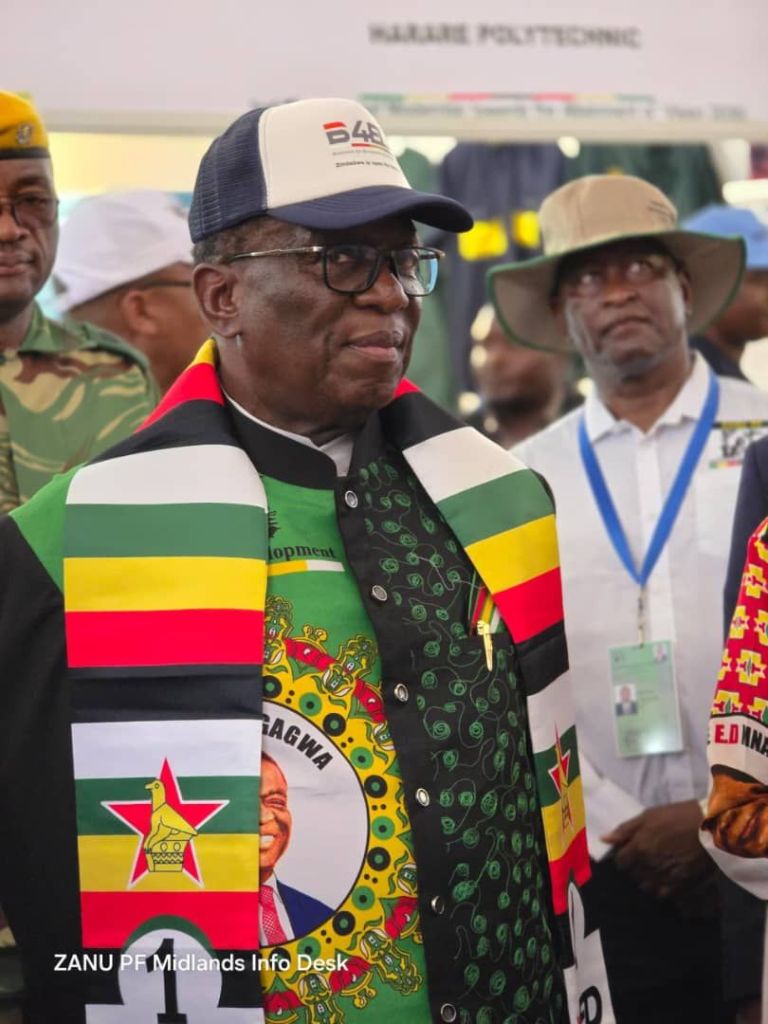
This move, announced by ZANU-PF secretary for legal affairs Patrick Chinamasa as he read the party’s conference resolution, came as no surprise to me.
Mnangagwa was aware that any genuine attempt to extend his tenure beyond the constitutional limit would have been met with formidable legal and political roadblocks.
The so-called “ED 2030” agenda, championed by some of his supporters, never really had a viable path forward.
While speculation continues about Mnangagwa’s ambitions, a deeper look at Zimbabwe’s Constitution, the procedural requirements, and political dynamics reveals why Mnangagwa would likely never have seriously pursued an extension—even if he wanted to.
Constitutional Constraints: A Stacked Deck Against Term Extension
Zimbabwe’s Constitution presents high barriers to any amendment that would extend a sitting president’s term.
Section 328(7) explicitly prevents a sitting president from benefiting from amendments to term limits, creating a fundamental obstacle for Mnangagwa.
This clause reflects Zimbabwe’s intent to prevent incumbent presidents from manipulating the Constitution to cling to power, a principle deeply rooted in the nation’s recent history of authoritarianism under Robert Mugabe.
Even if Mnangagwa managed to rally the political will to amend this section, the stringent procedural requirements are another significant deterrent.
To directly receive articles from Tendai Ruben Mbofana, please join his WhatsApp Channel on: https://whatsapp.com/channel/0029VaqprWCIyPtRnKpkHe08
Amending Section 328(7) would require a two-thirds parliamentary majority and a national referendum, a process designed to make any changes to fundamental democratic protections exceptionally challenging.
Mnangagwa and his advisors would have recognized that, practically speaking, these requirements stacked the deck against any realistic bid to extend his tenure.
The Two-Thirds Parliamentary Majority: A Steep Political Challenge
While ZANU-PF enjoys a strong majority in parliament, garnering the necessary two-thirds support for an amendment to presidential term limits is no small feat.
Such an amendment would require a near-total alignment within the party, which is fractured by internal divisions and competing interests.
Vice President Constantino Chiwenga, whose presidential ambitions are well-documented, commands significant influence within ZANU-PF and has a loyal following within the military and party structures.
This factionalism complicates any attempt to rally unanimous support for a term extension, as Chiwenga’s supporters would likely see such a move as a direct threat to his potential path to the presidency.
Furthermore, dissent within ZANU-PF could be exacerbated by lawmakers wary of public backlash.
Mnangagwa’s rule has seen a sharp economic decline, with inflation soaring, unemployment rampant, and public confidence waning.
Knowing this, some parliamentarians may be reluctant to tie themselves to a move that could be unpopular with the electorate.
Even among his supporters, there would likely be reservations about the optics of removing term limits, especially given Zimbabweans’ historical resistance to indefinite rule.
The Referendum Requirement: A High-Risk Gambit
Even if Mnangagwa were to secure the two-thirds parliamentary majority, he would still face the hurdle of a national referendum, as required under Section 328(3).
This clause mandates that any amendment affecting presidential terms must be ratified by a national vote, creating a platform for public debate and opposition mobilization.
Recent polling and anecdotal evidence suggest that a significant portion of Zimbabweans are dissatisfied with the current administration, making it unlikely that a referendum would favor a term extension.
In the event of a referendum, civil society groups, opposition parties, and grassroots movements would likely rally against the amendment, mobilizing Zimbabweans to vote against it.
Public figures and influencers opposed to indefinite rule would seize the opportunity to campaign on the issue, casting Mnangagwa’s bid as an attack on democratic principles and an affront to the people’s right to regular, peaceful transitions of power.
As highlighted already, the ruling party is riddled with deep divisions that would make it nearly impossible for them to work together for a successful referendum outcome.
Those aligned to Vice President Chiwenga may likely go for ‘bhora musango’ and vote against the constitutional amendments.
The Mnangagwa camp would face an uphill battle to sway public opinion, and a failed referendum would be a public relations disaster that could undermine the president’s authority.
Legal and Judicial Challenges: A Minefield of Constitutional Checks
Zimbabwe’s judiciary, while often perceived as sympathetic to the executive, would likely face immense pressure to maintain its integrity if Mnangagwa attempted to amend Section 328(7).
Amending this clause would directly challenge the judiciary’s role as a guardian of constitutional principles, putting judges in a difficult position.
Any court ruling that approved the amendment could be viewed domestically and internationally as a rubber-stamp decision, eroding public trust in the judiciary’s independence.
Moreover, Zimbabwe’s Constitution includes protections that emphasize the country’s commitment to democratic governance and rule of law.
Section 3, for instance, lists the supremacy of the Constitution, democratic values, and the separation of powers as guiding principles.
Legal experts and opposition lawyers would likely argue that a self-serving amendment violates the spirit of these principles, potentially leading to judicial challenges.
Mnangagwa would have been keenly aware of these risks, understanding that any attempt to override the Constitution might provoke a prolonged legal battle and could result in the judiciary nullifying the amendment.
Internal Party Dynamics and the Shadow of Chiwenga
A push to extend Mnangagwa’s term could deepen already-existing fault lines within ZANU-PF, particularly in relation to Vice President Chiwenga.
Chiwenga’s position within the party is closely linked to his role as the former commander of the Zimbabwe Defence Forces and as a key figure in the 2017 coup that removed Mugabe.
His influence within the party, and his backing by the military, gives him leverage that cannot be ignored.
Chiwenga’s faction, which is rumored to favor his own bid for the presidency, would likely view any term extension by Mnangagwa as a move to block Chiwenga’s path.
Such a perception could heighten tensions within ZANU-PF, destabilizing the party and potentially even leading to open factional conflict.
Mnangagwa, keenly aware of the dynamics that brought him to power in 2017, would recognize that a push for an extension might provoke a backlash from within his own ranks, undermining his authority and potentially inviting destabilizing forces within the military.
Fear of Public Backlash and Legacy Considerations
Beyond the legal and political barriers, Mnangagwa would also have to consider the public response to any attempt to extend his term.
Zimbabweans, particularly those who lived through the latter years of Mugabe’s rule, are acutely aware of the dangers of indefinite presidencies.
Mnangagwa campaigned on a platform of change and promised a break from Mugabe-era authoritarianism.
Attempting to amend the Constitution to allow an extended rule would be a betrayal of these promises, casting Mnangagwa as yet another leader unwilling to relinquish power.
Additionally, the economic situation in Zimbabwe is dire.
With skyrocketing inflation, food insecurity, and high unemployment, Mnangagwa’s administration faces widespread public dissatisfaction.
Attempting to stay in power beyond his term would likely intensify public discontent, potentially leading to protests, unrest, and further economic decline.
For Mnangagwa, the potential backlash could mean not only a loss of public support but also a damaged legacy, undermining any positive aspects of his leadership and casting him as a leader willing to prioritize personal power over the public good.
Conclusion: The Unintended Strength of Constitutional Safeguards
In the end, the various obstacles—legal, political, and social—illustrate why Mnangagwa may have ultimately chosen not to pursue a term extension seriously.
The Zimbabwean Constitution, designed to prevent the concentration of power and protect democratic principles, has proved resilient in the face of potential overreach.
Despite Mnangagwa’s position of influence, the formidable requirements for constitutional amendment, combined with the risk of public and party backlash, appear to have deterred any genuine attempt to extend his rule.
The “ED 2030” agenda, then, may have been less a serious policy proposal and more a reflection of the ambitions of some of Mnangagwa’s supporters.
Mnangagwa himself, understanding the stakes and the improbability of success, likely recognized that pursuing an extension would do more harm than good.
Even ZANU-PF secretary for legal affairs Chinamasa, while addressing party delegates at the just-ended conference, made reference to the constitutional hurdles awaiting the process of awarding Mnangagwa the term extension.
By respecting the Constitution’s term limits, he could preserve his legacy, maintain stability within ZANU-PF, and avoid the pitfalls that beset his predecessor.
In a nation still recovering from decades of authoritarian rule, this decision—or, perhaps, the lack of one—might ultimately be seen as a victory for Zimbabwe’s democratic processes and the strength of its constitutional protections.
For Mnangagwa, understanding that he was never going to get a term extension, even if he wanted it, may have been the only viable path forward.
 TENDAI RUBEN MBOFANA - THE UN-OPPRESSED MIND!